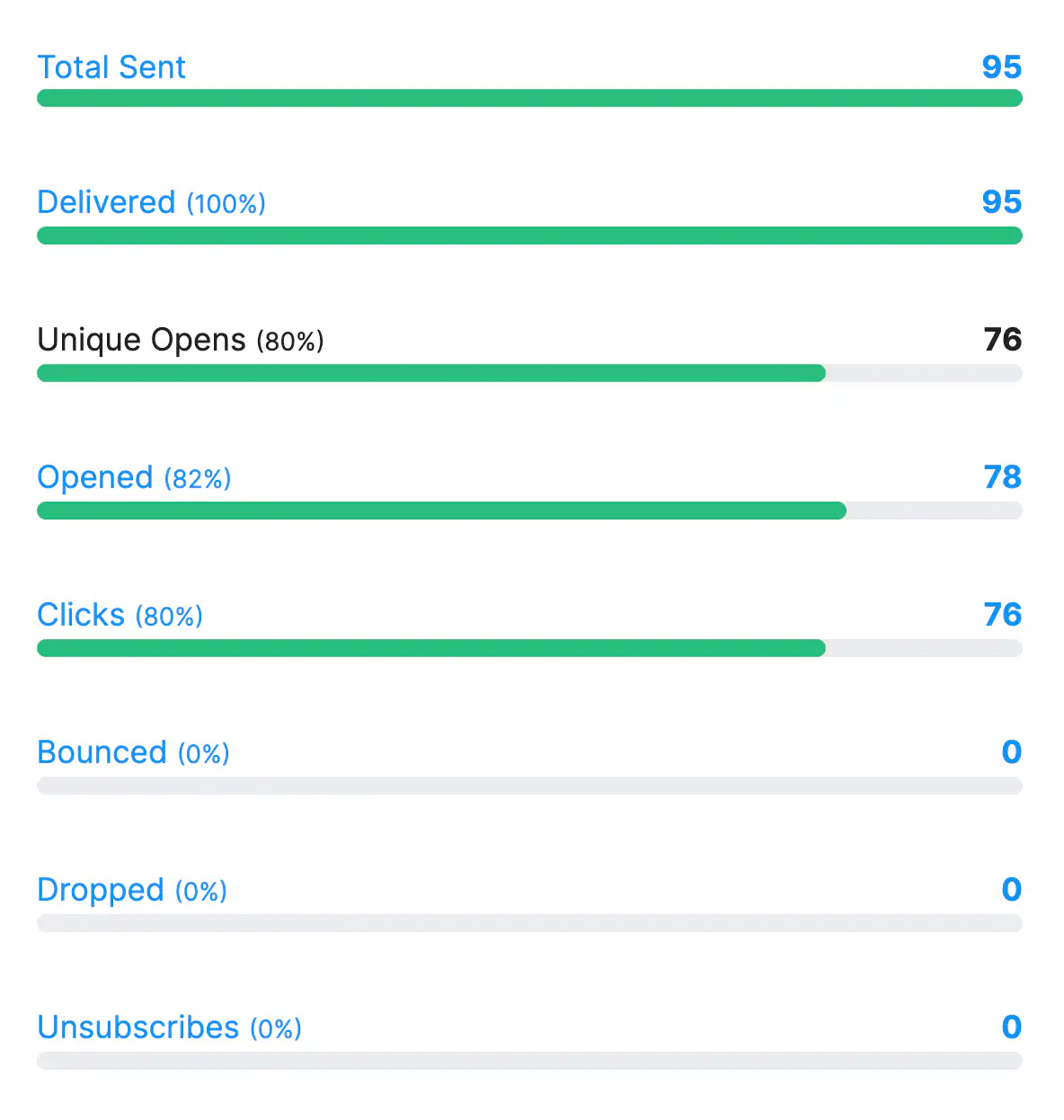
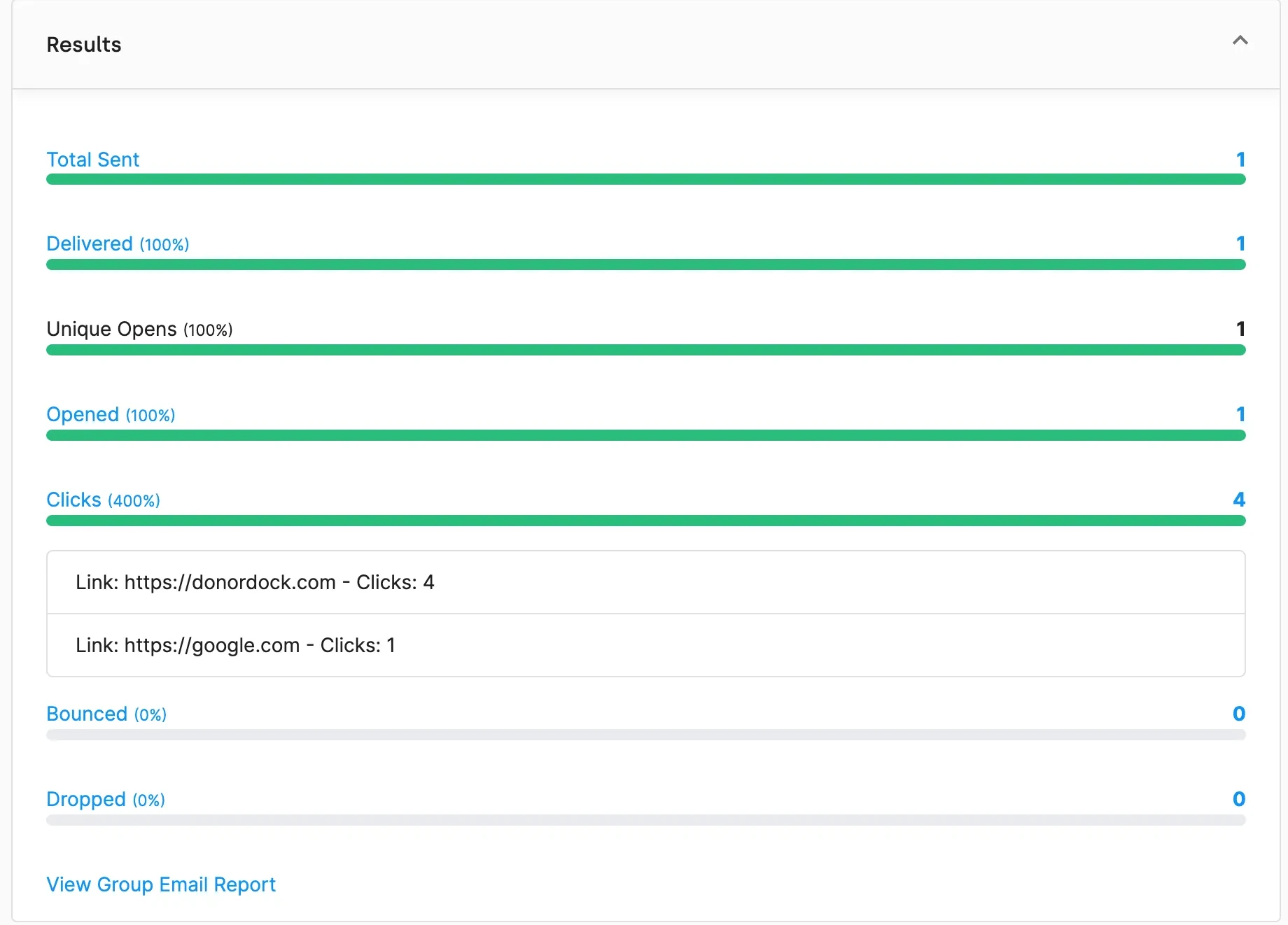
Every link in a bulk email gets tracked separately. The results panel lists each URL with its own click count, so you can see that 40 people clicked the donate button and four clicked the annual report — or the reverse, which tells you something entirely different about that audience.
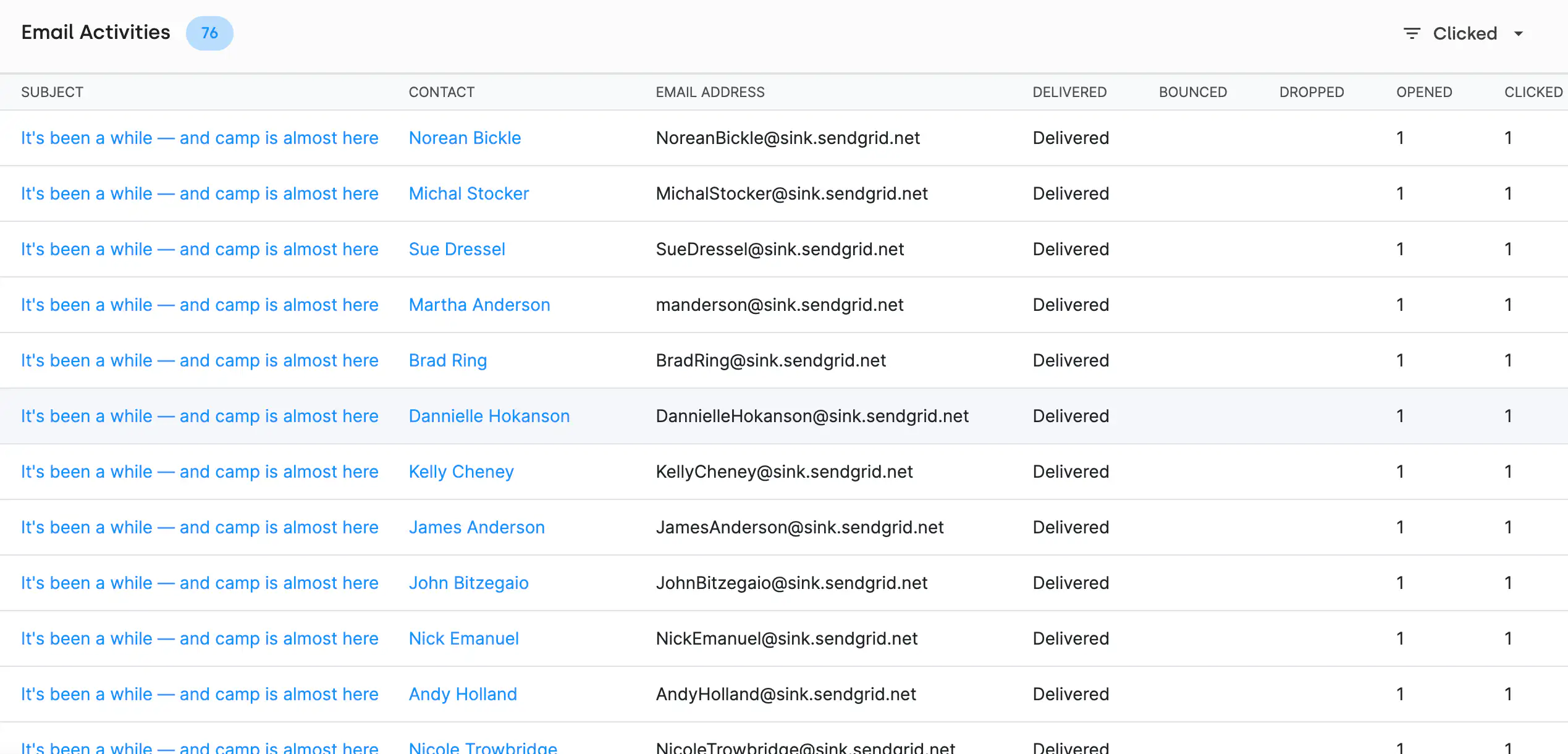
The email activities table shows a clicked count for each recipient, and you can run an activity report of everyone who clicked a specific link. A newsletter link about volunteering, clicked by nine people, is a volunteer prospect list you did not have to ask anyone to fill out.
Because clicks log as activities on the contact record, they are available everywhere else in DonorDock. Build a marketing list from the people who clicked. Create tasks for the person who owns those relationships. Trigger an automation from the activity so the follow-up happens on its own.
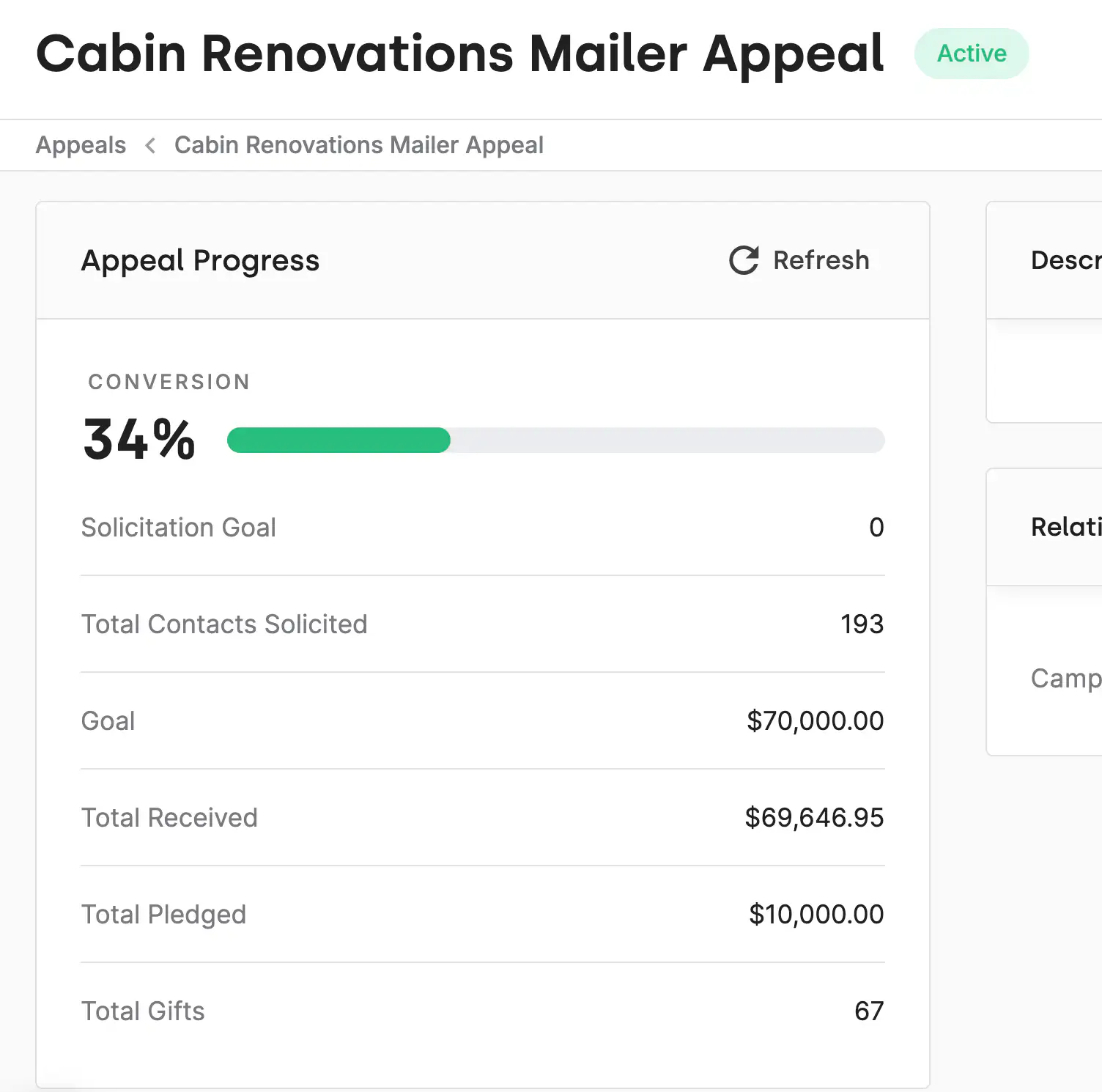
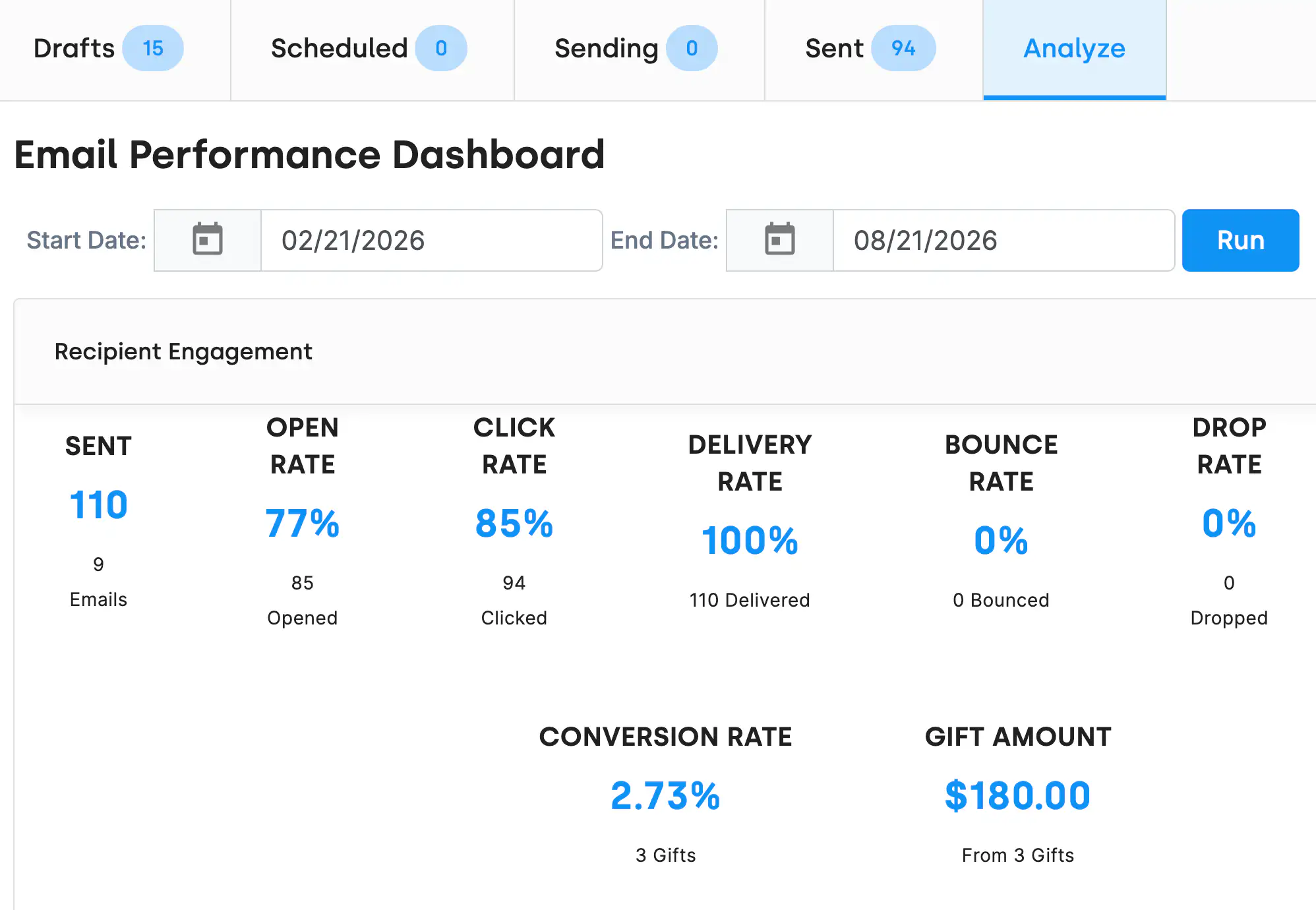
DonorDock also tracks conversions, the number of gifts created from clicking a link in an email, and the dollars those gifts represent. That is the number to bring to a board meeting, because it connects a specific email to specific revenue rather than to engagement metrics nobody can spend.
For the full picture of what gets measured on a send, see email analytics. For list hygiene, see email bounce detection.
Does DonorDock track which links donors click?
Yes. Each link in a bulk email is tracked separately, with its own click count listed in the email results.
Can I see which individual contacts clicked?
Yes. The email activities table shows a clicked count per recipient, and you can run an activity report of everyone who clicked a specific link.
Can I follow up with people who clicked?
Yes. Clicks log as activities, so you can build a marketing list, create tasks, or trigger an automation from them.
Can I see if a click led to a donation?
Yes. Conversion tracking shows the number of gifts created from email link clicks and the total amount raised.
Is click tracking more reliable than open tracking?
Generally yes. Some email clients block open tracking, while clicks are recorded when they happen.

.webp)