TL;DR: The average nonprofit development director lasts about 16 months, but that turnover is rarely a people problem. It is a design problem. When one person is asked to do eight jobs with no systems underneath them, burnout is the predictable result. Fix the infrastructure and the math behind the role, and retention follows.
If your last development director left before the 16 month mark, you were not unlucky and you probably did not hire the wrong person. You are living inside one of the most predictable patterns in the nonprofit sector. Development director turnover has hovered near a year and a half for more than a decade, and the causes have very little to do with individual effort.
The instinct, when a fundraiser resigns, is to write a fresh job description and reopen the search. But if you run the same role through the same conditions, you get the same result. The role itself, not the person sitting in it, is usually what breaks.
This is a reframe worth considering, because it changes what you do next. Instead of hunting for a more resilient hire, you redesign the job so an ordinary, talented human can actually succeed in it.
Why do development directors quit within 16 months?
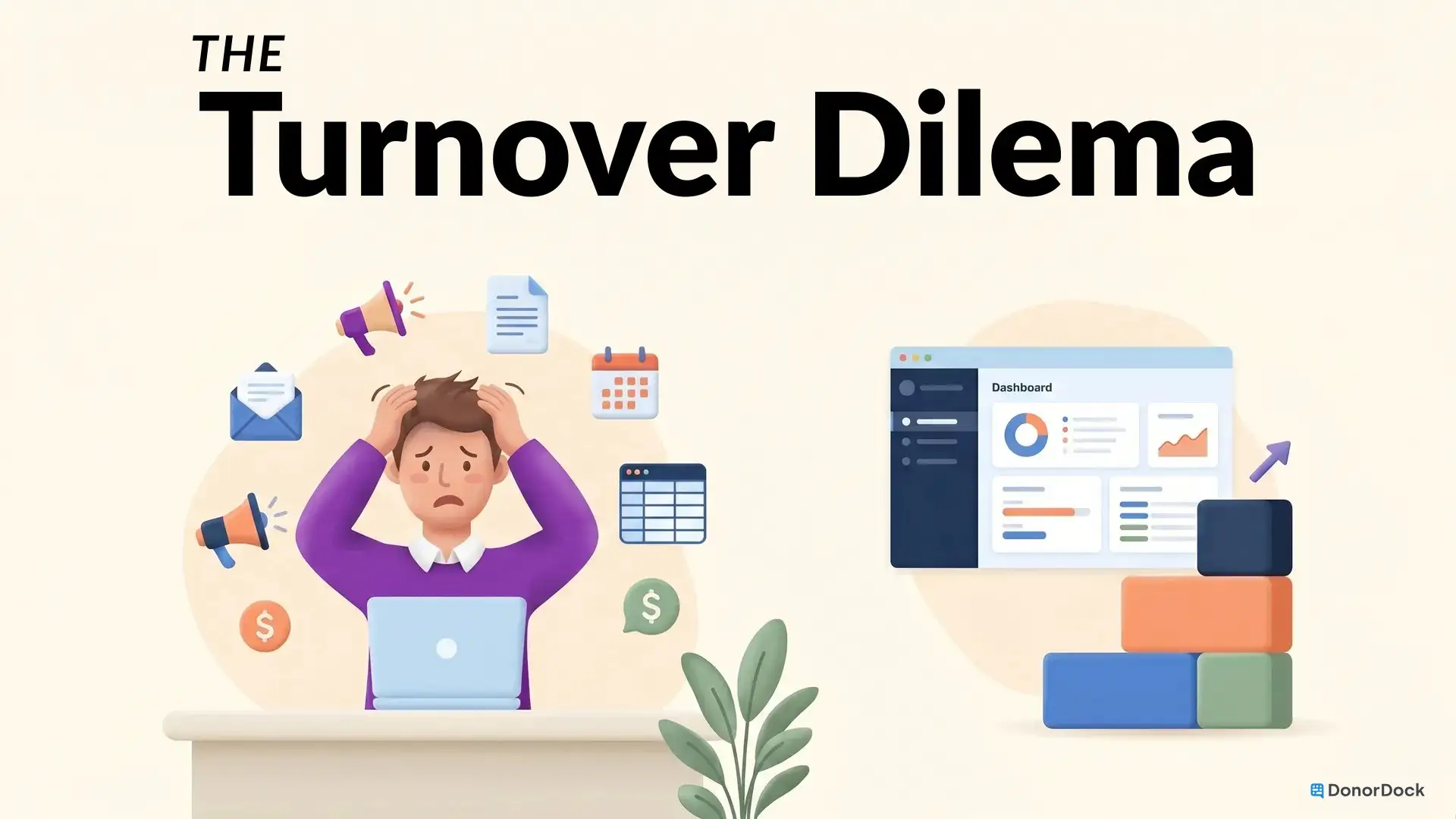
Picture the job description most growing nonprofits actually post. One person is expected to own communications, marketing, the donor database, grant writing, event planning, social media, annual appeals, and major gift cultivation. At a national brand or a university, every one of those is a separate role with its own team. At a lean shop, they all get bundled onto one set of shoulders.
It is the equivalent of hiring a plumber to build your entire house. Plumbing is essential, but no one would expect one trade to frame, wire, and roof the whole structure. We set the role up to struggle on day one, then act surprised when it does.
On a single job posting, that often means owning all of the following at once:
- Donor database management and data hygiene
- Grant research, writing, and reporting
- Email, direct mail, and the newsletter
- Social media and digital engagement
- Event planning and execution
- Annual appeals and year-end campaigns
- Major gift cultivation and stewardship
Each of those is a profession. Stacking seven professions onto one salary does not create a unicorn...It creates a countdown.
Half of the development directors plan to leave their job within two years, and organizations then struggled for a median of six months to fill the vacancy that follows. The reasons were unrealistic expectations, thin investment in fundraising systems, and leadership that stayed at arm's length from the work.
Burnout follows naturally. When the to-do list is genuinely impossible, a conscientious person does not slow down. They sprint until they break, and then they leave.
What is the real cost of fundraiser turnover?
The number you will see quoted most often is around $130,000 to replace a departed fundraiser once you total salary, benefits, and recruiting. That figure is real, but it only counts what sits above the waterline.
Below the surface sits the more expensive damage. Every transition interrupts the mission, stalls donor relationships mid-conversation, and quietly erodes trust with the exact people you most need to keep. It piles stress onto the remaining staff who absorb the orphaned portfolio. Add it up and the true cost can run closer to double the visible number.
The sector data shows why this hurts so much. According to the AFP Fundraising Effectiveness Project, overall donor retention slipped to 42.9%, the fifth straight year of decline. When donor loyalty is already this fragile, a revolving door in the development office is the last thing your relationships can absorb. Before chasing new names, it is usually smarter to fix retention before acquisition, and staffing stability is a major part of that equation.
Is fundraising failure a people problem or a systems problem?
Almost always, it is a systems problem wearing a people problem's clothing.
Part of the trouble is a timing mismatch baked into the language we use. Fundraising, development, and philanthropy get tossed into one bucket, but they move at different speeds. Development literally means growth over time. Major gifts can take 24 to 48 months of relationship building to mature. Meanwhile the organization needs cash this quarter. So we hand a brand new hire a short-term revenue target and a long-term relationship mandate, with no database, no processes, and no donor history to build on.
When the foundation is missing, even a gifted fundraiser spends their days reconstructing basic information instead of talking to donors. The work that actually produces transformational gifts never gets oxygen. That is a design flaw, and design flaws are fixable.
How can you tell the role is the problem, not the person?
A few signals show up well before a resignation letter lands on your desk. The fundraiser is constantly reactive, lurching from event to grant deadline to appeal with no time to plan. Donor meetings keep getting postponed because something more urgent always wins. The same data questions get re-answered every month because nothing lives in one place. And the calendar is full, yet almost none of it is spent in front of donors.
The person is doing exactly what the role allows, and the role does not allow the work that matters most.
Build the infrastructure before you hire the hero
The most reliable way to stop the revolving door is to stop expecting one person to be the system. Build the system first, and let it outlast any single hire.
Start with the donor database. In most struggling shops, donor knowledge lives in someone's head, a few spreadsheets, and a stack of event sign-in sheets. The first move is to consolidate all of it into one clearing house of information the organization owns. A central donor database like DonorDock turns scattered history into a capacity picture you can act on, so you can actually identify and prioritize your strongest relationships. This is the same instinct behind moving from napkins to systems: the knowledge belongs to the mission, not to whoever happens to hold the title this year.
From there, separate one-time infrastructure work from ongoing donor development. Standing up processes, cleaning data, and defining workflows are projects with an end date. Stewarding donors is forever. When you blur the two, the forever work always loses to the urgent project, and your fundraiser drowns. DonorDock's Action Board helps here by turning the daily relationship work into a clear, prioritized list, so the important keeps beating the merely loud.
Redesign the role before you refill it
Once the infrastructure exists, look hard at the role itself before you repost it.
Ask which pieces truly require a dedicated fundraiser and which were only bundled in because no one else was around. Communications and event logistics, for example, can often be shared, outsourced, or systematized. The goal is to protect the fundraiser's time for the one thing only they can do: build relationships that lead to gifts.
Leadership has a defined role to play, too. When executives and board members own a slice of the relationship work, even just a standing weekly donor conversation, you hand the development office hours back and you signal that fundraising is a whole-organization commitment, not a single hire's burden. That cultural shift is frequently what finally breaks the cycle. It is also why fundraiser turnover often starts before day one, in how the role and its supports are scoped.
What this means for your next development hire
If you are about to reopen a development director search, pause first. A new hire dropped into the same impossible job will follow the same 16 month arc, and you will be back here next year, poorer and more discouraged.
Instead, treat the vacancy as a chance to fix the system. Build the database, define the processes, separate infrastructure from development, and give leadership a real role. Do that, and the next person you hire walks into a job a talented human can actually win. For a wider view of how the pieces fit together, our fundraising strategy resources map the infrastructure, planning, and stewardship layers that keep a development office healthy.
The problem was never your people. It was the math. Change the math, and you get to keep the people, the relationships, and the momentum that turnover keeps stealing from your mission.