TL;DR: A donor experience audit is the practice of giving to your own nonprofit from a personal account and documenting what actually happens. Use these nine steps to turn a private moment of curiosity into a stewardship punch list your team can ship this quarter.
Most fundraisers know what their donor experience is supposed to look like. Very few have recently checked what it actually looks like. The gap between those two views is where retention leaks.
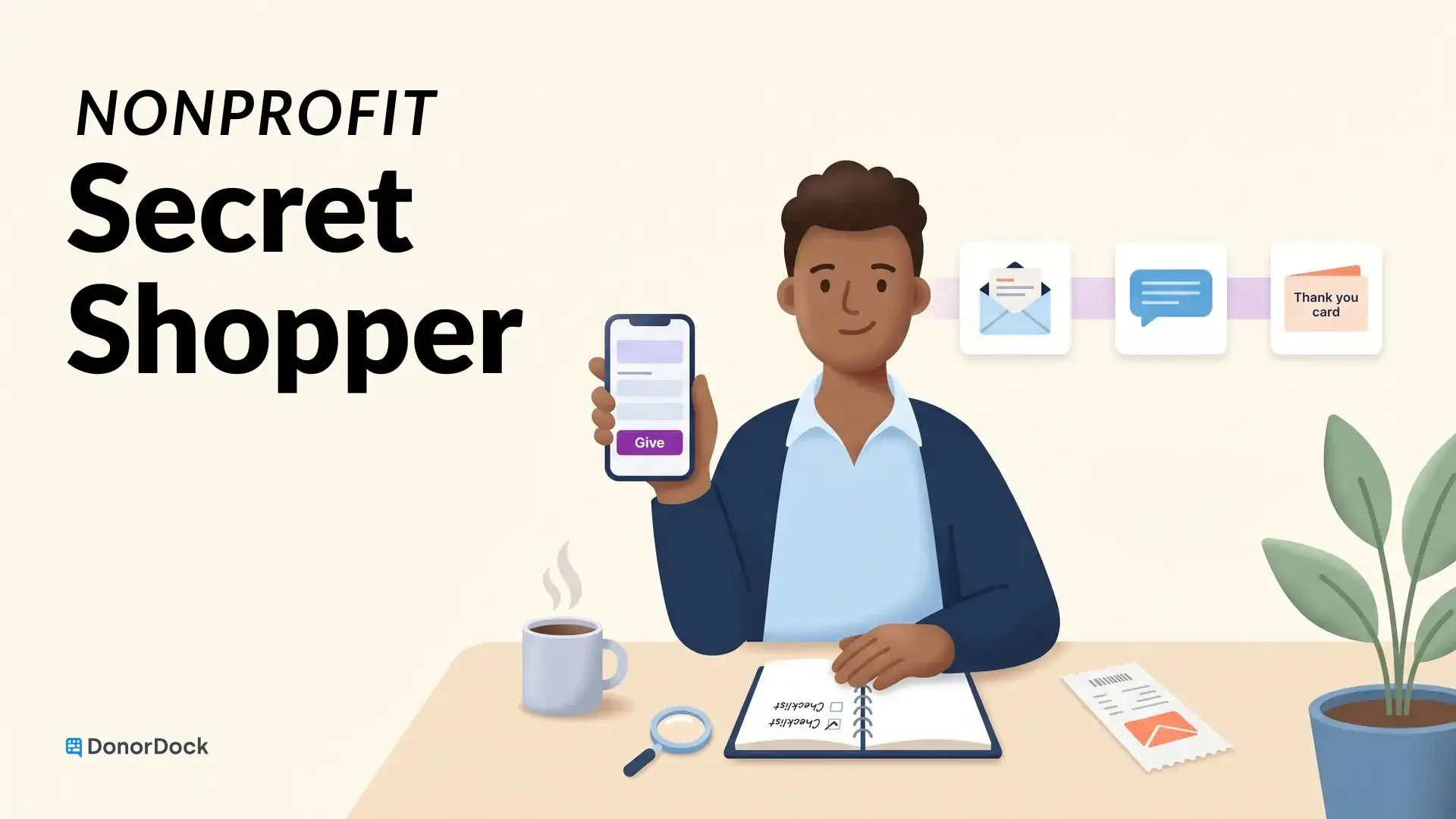
This audit closes the gap. It comes directly from Big Duck co-director Farra Trompeter, who recommends it in every fundraising training she leads: be a secret shopper to your own giving. Make a real donation from a non-work account, track every interaction that follows, and look at the experience the way an actual donor would. The first time you run this, you will find things that surprise you. Some will be small. Some will be embarrassing. All of them are fixable.
What is a donor experience audit, and why secret-shop your own giving?
A donor experience audit is a structured walkthrough of every touchpoint a donor encounters after they make a gift, from the moment they hit submit on your donation form through the next six months of communication. The audit is run from the donor's seat, not the staff seat. You see what they see, in the order they see it.
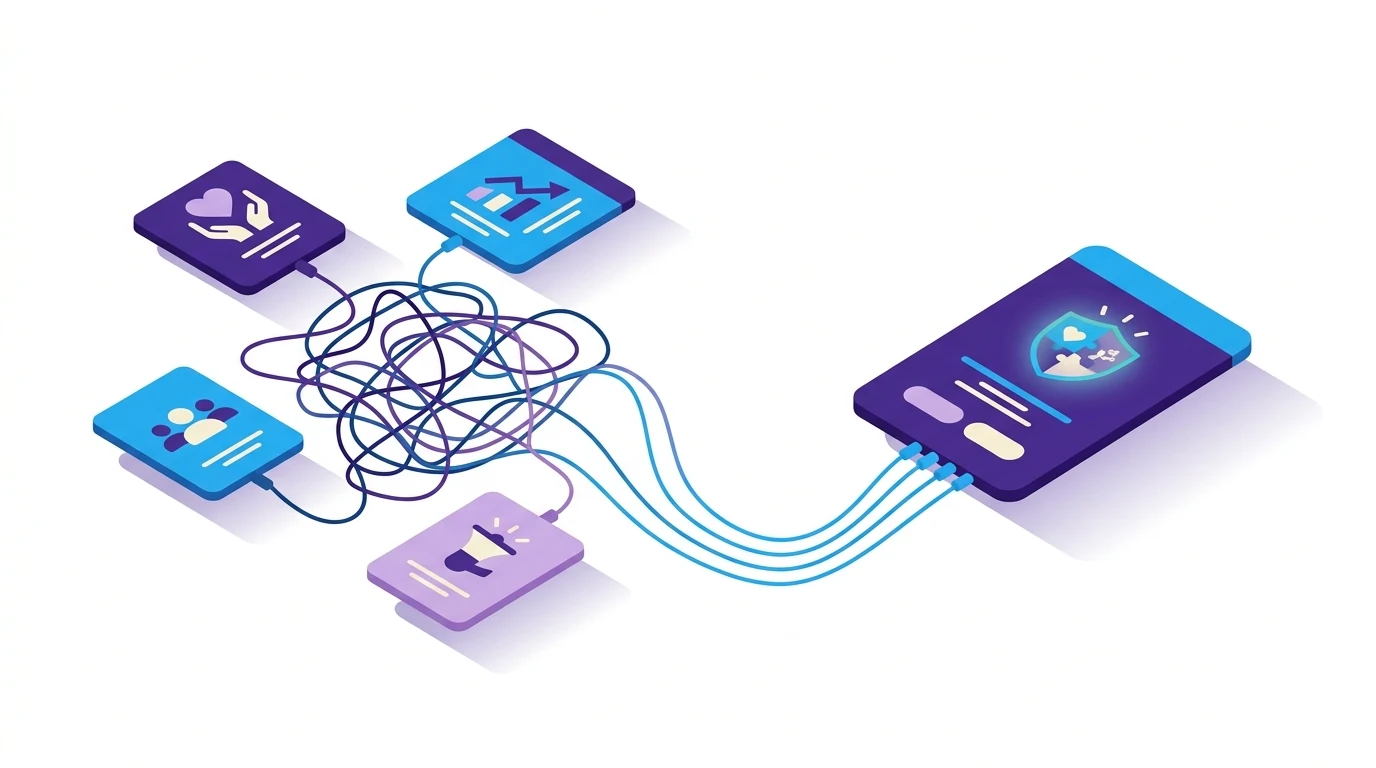
The reason to secret-shop your own giving rather than rely on internal documentation is simple. The documented donor journey is what your team intends. The audited donor journey is what your tools, integrations, and habits actually produce. The two are almost never the same. Even teams running modern stewardship operations on platforms like DonorDock will find friction points that hide inside default settings, third-party integrations, or routines that drifted years ago.
Open a personal email account you don't use for work. You are about to learn more about your own organization than any dashboard will tell you.
Step 1: Make a real gift from a non-work account
Use a personal email address, your home browser, and a real credit card. A real gift matters. Test transactions and staff comps skip the parts of the system that only fire for outside donors. If you can, use a slightly different name or middle initial so the gift doesn't auto-match to your existing record. Make the gift on an afternoon, not a morning, so you see how the experience holds up outside of staffed hours.
Note the timestamp. Every subsequent step will be measured against this moment.
Step 2: Audit the donation form itself
Before you click submit, look at the form with fresh eyes. Is the suggested gift array sensible? Does the form load quickly on your phone? Does it offer Apple Pay or Google Pay, or does it force you through a long credit card workflow? Is the recurring giving option visible without scrolling? Does the cover-the-fee toggle make sense, or is it tucked away?
Pro tip: try entering a typo in your email and see if the form catches it. A surprising number of recurring donor relationships die because the original signup had a malformed email address that nobody flagged.
Step 3: Time the email receipt
The receipt should arrive within five minutes. If it takes longer, something is wrong with your transactional email pipeline. Note who the receipt is from. Is it from a person, your executive director, your development director, or from a generic info@ inbox? Is it from someone who still works at the organization?
Read the receipt copy. Does it say thank you in a way that sounds like a human, or does it read like a payment processor confirmation? Is your mission named anywhere in the message? Is there a specific next step the donor can take, or does the email end with a tax-deductibility disclaimer and silence?
Step 4: Check the welcome sequence (or notice its absence)
Over the next seven days, watch what arrives. A healthy welcome sequence introduces the donor to your mission, your impact, and the people behind your work before it asks for anything else. A typical sequence might include a second message within 48 hours with a story of impact, a third message a few days later from a program leader or beneficiary, and a fourth message that invites the donor to follow you on one social channel.
If nothing arrives, your welcome sequence is the first item on the punch list. If a generic monthly newsletter arrives that treats you like a long-time donor on day three, your welcome sequence has been silently replaced by your main email list, and the new donor is being treated like someone who has already been around for years.
Step 5: Test the unsubscribe and preference paths
Click manage preferences or unsubscribe on one of the emails you receive. The path should be respectful, fast, and clear. The page should let you pick frequency or topic preferences rather than forcing an all-or-nothing exit. After you change a preference, your next email should respect the new choice. If it doesn't, you've found a stewardship break that erodes trust the moment a donor exercises any control.
Trompeter is specific about this one. If a donor says, "you can send me mail but stop emailing me," and you keep emailing them, you are degrading the relationship. Most organizations don't realize this is happening because the preference change quietly fails inside the integration between their email tool and their CRM. That is one more reason to utilize a CRM with built-in outreach.
Step 6: Audit the impact storytelling cadence
Over the next month, count how many messages you receive and label each one. Is it an ask, an impact update, a thank-you, an event invitation, or a survey? A healthy mix leans toward impact and acknowledgment between asks. An unhealthy mix is almost entirely asks with one obligatory year-end impact report.
The pattern matters more than any single message. A donor who hears from you only when you want money learns to associate your organization with extraction. A donor who hears from you with progress updates and thank-yous between asks learns to associate your organization with partnership. Same donor, two completely different giving relationships.
Step 7: Try the second-channel touchpoints
If your organization texts, opt in to texts and see what arrives. If your organization sends mail, watch the mailbox. If your organization makes thank-you calls, time how long until one happens or note that none ever does. Cross-channel consistency is one of the strongest indicators of stewardship maturity.
Pay particular attention to the seams between channels. If your email said "thank you, John" but your mailed acknowledgment said "Dear Friend," your CRM and your direct-mail vendor are not talking to each other the way you assumed. If your text says "Happy GivingTuesday" two days after the email already said it, your channel calendar is competing with itself instead of compounding.
Step 8: Make a second gift and check stewardship escalation
This is the step most skip, and it's the most revealing. About thirty days after your first gift, make a second gift. Pay attention to whether anything changes. Did the system recognize you as a returning donor? Was the second receipt warmer or more specific? Did a person reach out, or did the second gift trigger exactly the same workflow as the first?
The second gift is the most important moment in the donor lifecycle. A donor who makes a second gift is dramatically more likely to keep giving. If your stewardship doesn't escalate at the second-gift moment, you are leaving long-term retention on the table.
Step 9: Document the gaps and assign owners
Open a single document. List every break, friction point, and missed opportunity you encountered. Next to each one, write the owner: development, communications, finance, IT, or external vendor. Assign a fix-by date. This is your stewardship punch list for the next ninety days.
Inside DonorDock, this is exactly the kind of work the Action Board and Project Boards are built to manage. Each fix becomes a tracked action with an owner and a due date. The audit is not useful as a static document. It becomes useful as a backlog your team actually closes one item at a time.
How often should you run a donor experience audit?
Run a full audit in Q1 to set up the year, and a focused one in Q3 to pressure-test your end-of-year experience before the heaviest giving period. After a rebrand, after a CRM migration, or after a major change to your donation form, run an extra spot audit specifically targeting whatever changed.
Pro tip: change your test name or use a special email address each time you audit so you can isolate the experience without polluting your live data.
From audit to system
The first time you run this, you will fix a stack of small things and feel a surge of stewardship pride. The second time you run it, you will find a new stack. That's not a sign of failure it's the nature of stewardship: a living system that drifts unless it is regularly checked.
The teams that turn this audit into a recurring habit are the ones whose retention numbers begin to compound.
If you're rebuilding the experience after the audit, the Smart Steward Method is the operational rhythm DonorDock customers use to turn audit findings into a sustainable stewardship workflow. Pair the audit with a clear stewardship cadence and the gaps stop coming back.
The best brand exercise your nonprofit will run this year is the one where you give your own organization twenty dollars and ninety minutes of attention. The findings will not stay private for long.