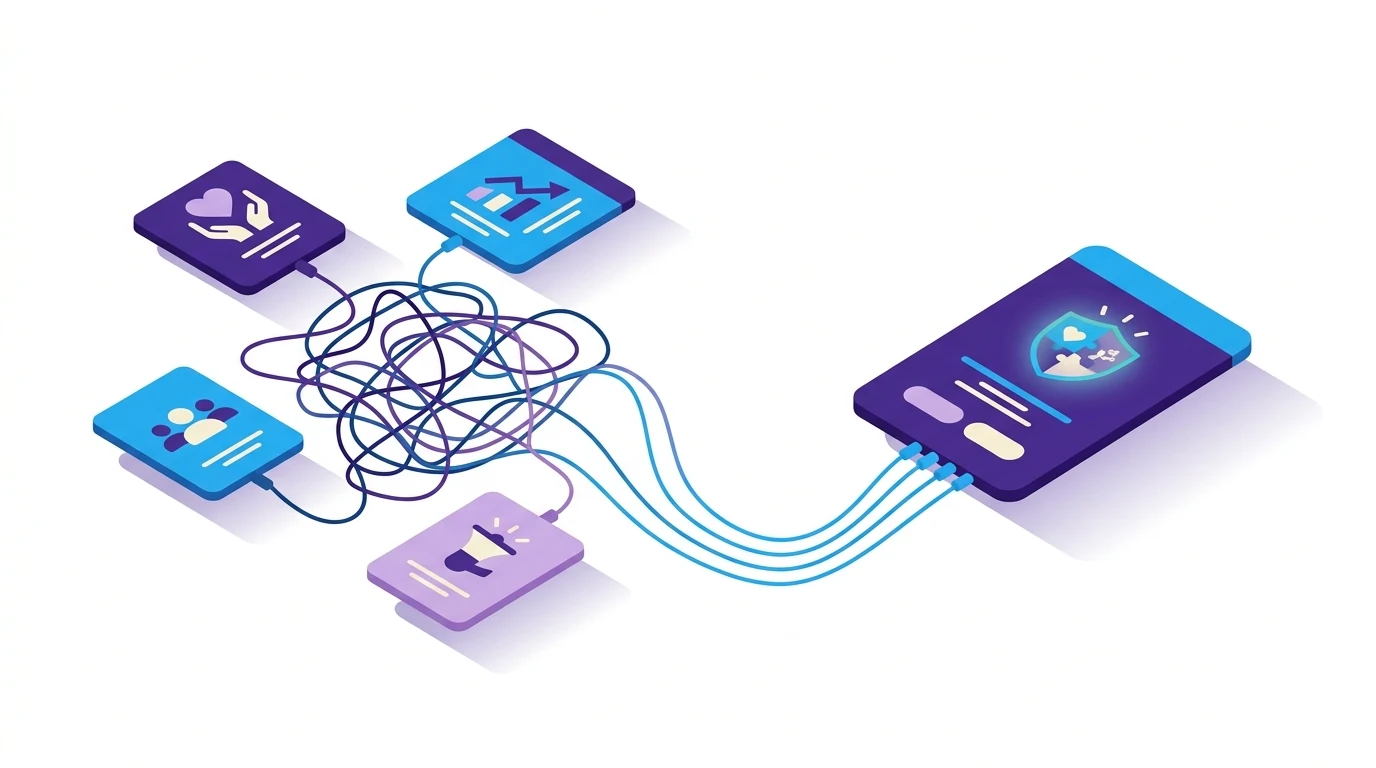
You don’t need a flawless launch to make meaningful donor connections. In fact, chasing perfection often delays what donors value most, authentic connection. The truth? Starting matters more. You’ll learn, refine, and grow—and that iterative approach builds trust that lasts.
Why Imperfection Builds Trust
When you stall a fundraising email or delay thanking a donor because you’re still editing, you’re missing the point. Donors aren’t expecting a TED Talk in your inbox, they’re looking for genuine updates, heartfelt messages, and real results, even if imperfect.
Donor relationships thrive on genuine human interaction, not perfection. When your message feels overly polished or rehearsed, it can create distance rather than connection. But when you let your personality shine through (even with a typo or two) you signal that there's a real person behind the message, someone who cares deeply about the mission and the donor’s role in it.
How a Clipped Newspaper for a Donor Built Relationships, captures this perfectly. A handwritten note and a local newspaper clipping made a bigger impact than a hundred perfectly formatted emails. That simple gesture created an emotional connection that the donor remembered and valued because it was personal and real, not perfect.
Getting Started Is Half the Battle
Perfectionism is the great fundraiser delay tactic. You tweak the subject line for days, question the tone, worry the photo isn’t high-res. And in the meantime, donors don’t hear from you.
But starting, even with a draft, is what sparks momentum. When you send something, anything, you:
- Learn what resonates through real responses
- Set a cadence of communication
- Gather data to inform the next message
In 5 Weekly Rituals Every Growing Nonprofit Fundraiser Needs, we lay out a rhythm that prizes consistency over grandeur. Weekly rituals like donor thank-yous, impact shares, and check-ins can keep relationships growing without needing a “perfect” campaign launch).
Hear from a fundraiser how he battles perfetionism.
Iteration Over Perfection
You don’t have to get it right once. You get to improve over time. That’s the beauty of iterative fundraising:
- Evaluate what worked. Look at open rates, click-throughs, donor responses.
- Adjust your message. If your ask was too soft or your story too long, reframe it.
- Try again. Each new touchpoint is a new chance to connect.
It’s about small adjustments that build big trust. We call this the Relationship Loop: you engage, you reflect, you refine, and you re-engage. It’s relational, not transactional.
Real Stewardship Happens Over Time
The best donor relationships aren’t born from a single, polished ask, they grow over months and years. But the data shows you can’t afford to wait.
- First-time donor retention is just 20–25%.
- With consistent stewardship, that can jump to over 60%.
- Loyal donors who give for five years can make up nearly half your revenue, even if they’re a small percentage of your base.
First-time gift, recurring donor, advocate––being present through every phase of a donor's journey with you is more important than being polished and perfect.
Simple Starts That Matter
You don’t need a complex automation funnel to make an impression. You just need to start.
Start with a simple thank-you email. Keep it short, warm, and human. Send it within 48 hours of a gift even if it’s automated. A genuine thank-you lays the foundation for future trust.
Next, share a real impact story. It doesn’t need to be a cinematic narrative. Just show how their gift made a difference. Add a quote, a photo, a specific result. Realness wins.
Then, ask a question. Invite feedback. Something as simple as “What inspired you to give?” can open a conversation and help you tailor future messages.
Finally, tag and segment your donors. Even basic tags like “first-time” or “monthly donor” help personalize future touchpoints. Over time, these tags let you iterate and communicate smarter.
These aren’t big lifts. But together, they help you ship instead of stall. And they help you speak to donors with relevance and warmth.
Why This Works for Small & Growing Teams
The biggest myth in nonprofit marketing is that you need to do everything flawlessly or not at all.
But perfection leads to paralysis. And small shops don’t have time for that.
Here’s what authenticity and iteration unlock:
- Mental freedom: You’re not obsessing over formatting or phrasing.
- Faster momentum: You can act, adjust, and improve each time.
- Better results: Donors respond to real people, not corporate polish.
- Sustainable growth: Trust builds slowly, through consistency, not one big splash.
This is exactly what Otto was built for. Otto is an intelligent fundraising assistant that nudges you to send those thank-yous, follow up on pledges, and stay consistent—without overthinking it. As Otto would say, “You deserve more than just a helping hand. You deserve eight of them.” Meet Otto
Ready to Ditch Perfection?
Here’s your invitation:
- Send that email draft.
- Share that imperfect update.
- Ask for feedback even if you don’t have a survey tool.
- Thank donors even if it’s just a quick reply.
Every time you act, you learn. Every time you show up, you build trust. And every time you prioritize real connection over polish, you move your mission forward.
Start building meaningful donor relationships today. Focus on what matters most.