Short answer: To re-engage lapsed donors, pull last year's donors who haven't given this year, then work it for 30 days. Research your top donors in week one, call and write notes in week two, follow up with warm responders in week three, and sort everyone by next step in week four.
A donor gave last year. This year, they haven't. You know they're out there, dozens, maybe hundreds of them, sitting in your database with no recent gift. These are your lapsed donors, and they're about to become your highest-ROI fundraising opportunity.
According to the Fundraising Effectiveness Project's 2025 year-end report, only 3.0% of lapsed donors (people who had already skipped a full year of giving) came back and gave again in 2025. Re-engagement works. Most nonprofits just aren't working their lapsed donor lists systematically or building lasting connection, because they're busy chasing new donors. But reactivating someone who gave before costs a fraction of acquiring someone new, and they're far more likely to say yes.
This 30-day playbook gives you the exact steps to beat that 3%.
Why Your Lapsed Donors Matter More Than You Think
Donor retention is where fundraising is won or lost. Yet we obsess over acquisition. The same FEP 2025 data puts new donor retention at just 18.9% (donors acquired in 2024 who gave again in 2025), against 59.3% for repeat donors and 43.3% overall. Translation: about four out of five first-time donors don't give again the next year, and once someone lapses, winning them back is even harder. (We dug into this tension in Don't Chase New Donors at the Expense of the Ones You Have, and here's how to raise your second gift conversion rate so fewer donors lapse in the first place.)
Lapsed donors represent recaptured revenue with minimal acquisition cost. They already know your mission. They've already said yes once. They're not strangers. They're relationships on pause.
How to find and track lapsed donors
A LYBUNT donor gave Last Year But Unfortunately Not This year. A SYBUNT donor gave Some Year But Unfortunately Not This year, which catches people who drifted away two or more years ago.
To build the list, run a report of everyone with a gift in the previous calendar or fiscal year and no gift so far this year. That's your LYBUNT list. Widen the date range to any earlier year and you have your SYBUNT list. Sort both by last gift amount and last gift date, and save the report so you can rerun it instead of rebuilding it.
Before you label anyone lost, look for donors who give every other year or every few years. They're loyal on a longer rhythm, so a thank-you and an update will land better than a win-back appeal.
Then track three numbers every month: how many donors are on each list, how many of them have given again, and the dollars they brought back. Divide the donors who came back by the size of your starting list and you have your own win-back rate. For your SYBUNT list, the sector yardstick is that 3% FEP recapture figure. If you want the list built and the follow-up queued for you, see how DonorDock handles lapsed donor reactivation.
The Foundation: Identify Your List
Before you do anything, you need to see who you're working with.
Step 1: Pull your LYBUNT list. Open your donor management system and generate a list of everyone who gave last year, but has no gifts recorded this year so far. If you use DonorDock's donor management tools, run a quick report filtering for donors with last gift date and no gifts in the current year. This is your working list.
Prioritize by gift size. Start with donors who gave $1,000+. Then $100-$1,000. Then everyone else. You can work through the entire list eventually, but major lapsed donors move first.
Step 2: Review recent history. For each donor (especially your top 20-30), pull their full record. What was their giving pattern? Were they consistent annual donors or occasional? How long has it been since they gave? Did something change in their interaction? Look for clues. Did they attend an event? Stop opening emails? Go from $1,000 gifts to $50 gifts before disappearing? Using Otto Insights, you can gain this insight quickly for each donor.
If your donor timeline is incomplete, start filling it in now. Note any interactions, emails opened, event attendance, website visits, peer connections. Data quality matters. Even basic note-tracking about donor interactions is valuable and informs your outreach strategy. (For a deeper dive into how to segment your donors strategically, check out our segmentation guide.)
Week 1: Preparation and Light Touch
Monday through Wednesday: Deep research phase. Spend two days researching your top 20 lapsed donors. Google them. Check LinkedIn. See if their circumstances changed (new job, moved, visible major life event). Note anything relevant. Check if they're still aligned with your mission or if their giving profile suggests different interests.
For major donors, consider asking a board member or volunteer who knows them if there's context you're missing. "Hey, I noticed Sarah hasn't given this year. Do you know if anything changed?" Casual, not accusatory.
Thursday: Draft your messaging framework. Don't write individual emails yet. Create a framework: Why you're reaching out (genuine, not transactional), a specific impact moment they enabled, and one clear ask. Here's a template:
Hi [Name], I was looking through our donor records and realized it's been [timeframe] since we last heard from you. I wanted to reach out personally because your support in [specific year/program] made a real difference in [specific outcome]. I'd love to catch up. Do you have time for a quick call this month? No pressure, just want to reconnect and hear how you're doing. All my best, [Your name]
Friday: Create an outreach tracking system. You need to know who you've contacted, when, how, and what happened. A tracking system with columns for donor name, email, phone, last gift amount and date, outreach method (call, email, letter), date contacted, response, and next step. Or use your donor management system's contact tracking feature if available.
Week 2: Personal Outreach Begins
Monday and Tuesday: Phone calls to major lapsed donors. Email can wait. Call your top 15-20 lapsed donors directly. Not to pitch. To reconnect.
Your opening: "Hi [Name], this is [You] from [Organization]. I hope I'm catching you at a good time. I was thinking about your generosity over the years and realized it's been a while since we connected. How are you doing?"
Listen more than you talk. Ask about them. Ask what they've been up to. If they're engaged, ask genuinely: "What's changed for you?" Some will be honest. Maybe their financial situation shifted. Maybe they forgot about you. Maybe they gave elsewhere. That's valuable data.
If they're warm: "We'd love to reconnect you with the work. Would you be open to hearing what we've accomplished since your last gift?" If they say yes, you've earned a real conversation. Schedule a follow-up call or meeting for later that week.
If they're lukewarm or distant: Thank them warmly, say you'll stay in touch, and move on. Don't push.
Wednesday: Handwritten notes to mid-level lapsed donors. Calls don't scale. Emails feel impersonal. Handwritten notes split the difference. They're memorable, they show effort, and they work and can be delegated to volunteers and board members. These kinds of meaningful touchpoints are central to what the Relationship Loop stewardship framework calls "staying in the loop" with your donors.
Pick 20-30 mid-level lapsed donors (usually in the $100-$1,000 range). Spend 45 minutes writing personal notes. One paragraph. Something like:
Dear [Name], I was thinking about the impact you've made over the years, and I realized it's been a while since we last connected. Your support has been meaningful to our mission, and I wanted to reach out personally to say thank you and to see how you're doing. Would love to catch up when you have a moment. Warmly, [Your name]
Handwritten. Stamped. Personal. Mail them Wednesday so they arrive the following week.
Thursday and Friday: Segment-based emails to remaining lapsed donors. For everyone else on your LYBUNT list, send a segmented email campaign. Don't blast one message to 500 people. Segment by gift size or giving frequency and customize slightly.
Subject line options: "We miss you," "One year, zero gifts (and we noticed)," or simply "[Your name] here." Avoid urgency language, donation buttons, hard asks. This is a re-engagement email, not a fundraising ask.
Email template:
Hi [Name], I'm not reaching out to guilt you or to immediately ask for money. I'm reaching out because your past support meant something to us. And I'm curious if something changed, if our work isn't aligned with your interests anymore, if life got busy, or if you're exploring other causes. All of those are totally valid. If you're open to it, I'd genuinely like to reconnect. No obligation. Here's what we've been up to [link to 1-2 accomplishments or impact stories]. Let me know if you want to talk. [Your name]
Week 3: Follow-Up and Momentum
Monday through Wednesday: Response management. By now, you'll have initial responses from Week 2 outreach. Track everything. Some donors will reply to emails. Some will call back. Some will ignore you. All of this is data.
For warm responders: prioritize. Schedule calls or meetings. Prepare a quick talking points sheet. What's changed since they gave? What impact did their gift create? What are you working on now? How can they re-engage?
Use this call to listen, not pitch. Ask what matters to them now. Ask if anything prevented them from giving. Listen for barriers (financial, organizational misalignment, life circumstances) and objections (you changed your focus, you're not transparent, I give to others now). These are goldmines of insight.
Thursday and Friday: Deeper engagement for warm prospects. Some of your Week 2 contacts will indicate interest in re-engaging. For these donors, move fast. Send them a specific re-engagement opportunity within 48 hours of their interest.
This could be: an invitation to an upcoming event, a request to volunteer, a personal briefing call with your executive director, or a specific program they can support. Make it easy to say yes.
If they gave because of a specific program before, highlight that program. If they're interested in transparency, send them your latest impact report. Match the ask to the donor.
Week 4: Closing and Systems
Monday through Wednesday: Final outreach push. Send a second email to everyone who didn't respond in Week 2. Keep it brief and friendly, not pushy.
Hi [Name], Quick follow-up on my note from last week. Genuinely no pressure, but if you have 15 minutes this month, I'd love to hear how you're doing and catch up on our work. Either way, we're grateful for what you've done for us. Take care, [Your name]
Thursday and Friday: Document, evaluate, and establish next steps. Go through your tracking system. How many donors did you reconnect with? How many expressed interest in re-engaging? How many remain unresponsive?
Categorize them:
- Hot leads: Expressed interest, have scheduled calls/meetings, likely to give again soon
- Warm prospects: Responded positively but haven't committed yet. Need one more touch
- Cold prospects: Unresponsive after two touches. Move to "check in quarterly" list
- Churned: Explicit "no" or clear misalignment. Archive and revisit in 12 months
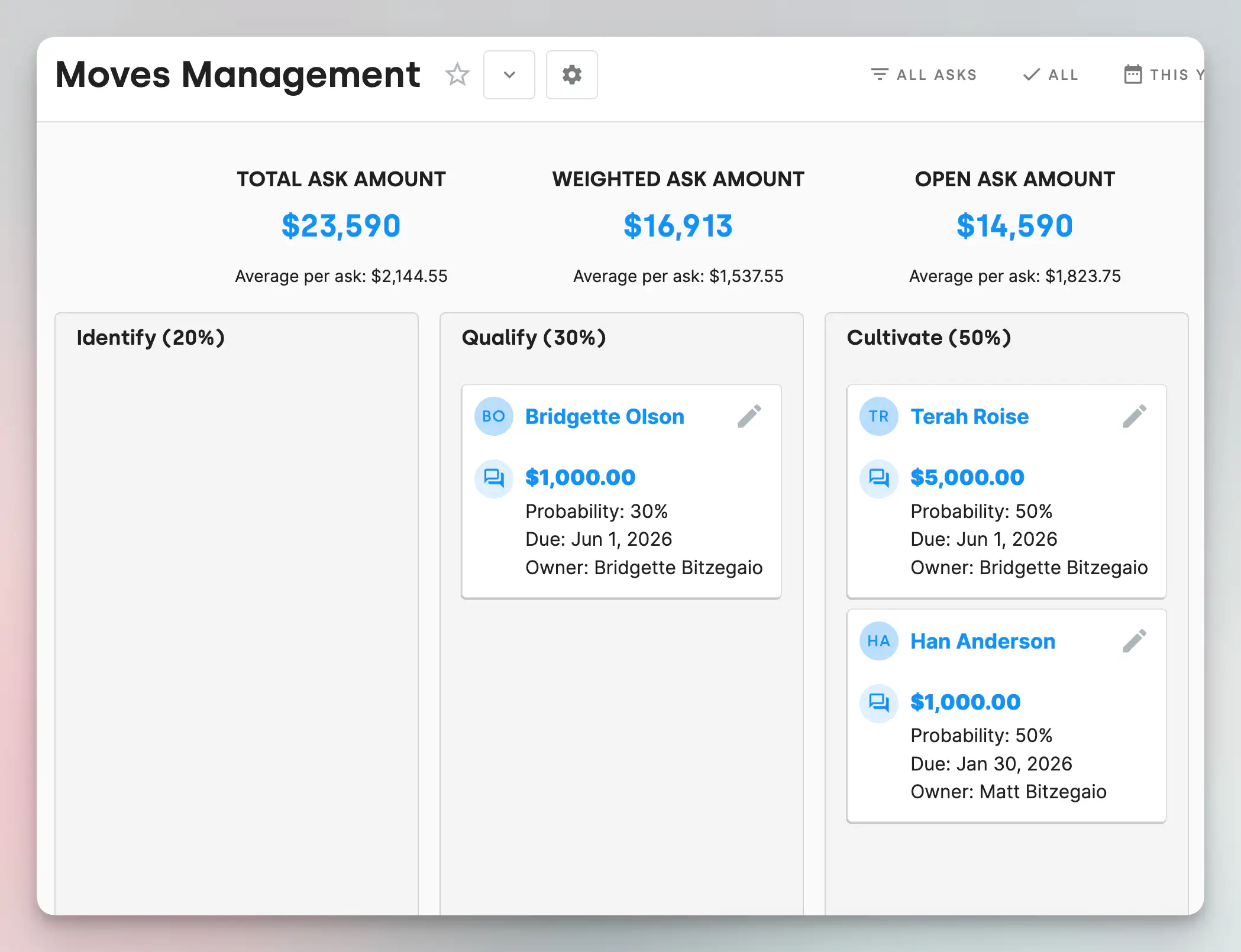
This categorization informs your next 30 days. Hot leads get immediate follow-up. Warm prospects get a third touch with a specific ask. Cold prospects move to a quarterly nurture sequence. Churned donors get a "we'd love to have you back someday" annual touchpoint.
What Success Looks Like
There's no reliable sector benchmark for a 30-day win-back push, so measure against yourself. Count how many donors on your LYBUNT list moved back to active status, and compare that with what happened the last time you didn't work the list at all. Some will commit to multi-year pledges. Some will give once and go quiet again. That's normal.
You won't win everyone back, and that's fine. The point is systematic, deliberate outreach (stewardship) that turns your lapsed donor list from a forgotten spreadsheet into an active revenue pipeline.
Building Systems for the Long Term
This 30-day push works because it's intensive and personal. But you can't do this every month without burning out. After you complete the initial 30 days, establish ongoing systems.
Quarterly LYBUNT reviews: Every quarter, regenerate your LYBUNT list. Identify who moved from lapsed to active (celebrate this). Identify new lapsed donors and prioritize them. Keep the momentum going, but don't make it overwhelming. The Evaluate, Establish, Execute loop from the Smart Steward Method is built for exactly this kind of iterative improvement.
Donor record keeping: Use your system to track interactions. If you use DonorDock's donor timeline and contact record features, log every outreach attempt, call, email, and response. Next time you work a lapsed donor list, you'll know exactly what was tried and what worked.
Retention metrics: Start tracking retention rate intentionally. What percentage of 2025 donors gave again in 2026? What percentage of 2026 donors will give in 2027? Watch these numbers. They matter more than acquisition metrics. (Our deep dive on donor retention breaks down why recurring donors are the real engine of sustainable fundraising.)
Microdonor focus: Donors giving $1 to $100 make up just under half of all donors, and in FEP's 2025 data they had the steepest drop of any gift-size group, down 7.9%. They also retain at the lowest rate. Create a specific engagement strategy for lapsed $1-$100 donors. Maybe it's a monthly email update, a quarterly impact call, or a feedback survey. Keep them connected without demanding major investment.
The Human Piece
AI can help you understand donor history, identify patterns, and draft communication templates. But building relationships is the human piece. No computer can replace the conversation where a donor says, "I gave because of that program," and you remember why you started this work in the first place.
This 30-day playbook works because it puts you back in touch with donors who already said yes. You're not convincing strangers. You're reconnecting with people who believe in your mission. Some will come back. Some won't. But the ones who do? They're your most cost-effective revenue stream.
Pull that LYBUNT list. Start making calls. Your budget probably depends on it.