"I famously have no memory," Rachel admitted during our conversation. And then she said something about donor relationship management: "So I actually rely heavily on my donor database... I actually prefer just to write it down and get it out of my brain."
Wait, a successful fundraiser who's built sustainable giving programs across multiple nonprofits doesn't rely on memory? She's not superhuman? She just has a better system?
The nonprofit sector has created a mythology around "relationship fundraisers" that's quietly burning people out. We celebrate the development director who remembers every donor's grandchild's name. We admire the major gift officer who recalls obscure details from conversations six months ago. We promote the fundraiser with the "gift" for relationships.
But relying on individual memory doesn't scale. It doesn't survive staff transitions. And it creates a culture where burnout is more prevelent.
Successful donor management requires tracking contact details, documenting outreach and meetings, capturing email interactions, and incorporating both external research and internal commentary.
That's not superhuman memory. That's systems.
The fundraisers building the strongest donor relationships are the ones with the best systems for capturing, organizing, and acting on donor information without drowning in administrative work.
Why is the "heroic memory" approach not effective?
Nonprofits can't afford to lose institutional knowledge when one person leaves. Yet that's exactly what happens when donor relationships live in someone's head instead of in documented systems.
Staff turnover destroys relationship continuity. When your star fundraiser who "just knows" all the donors moves on, they take years of context with them. The new person starts from scratch, asking donors to repeat stories they've already shared. According to DonorDock's research on tracking donor engagement, organizational knowledge about donors must live within the organization, not within one person.
Memory fails under pressure. When you're juggling program management, board relations, grant writing, and fundraising, your brain doesn't have infinite capacity for donor details. The exact moment you need to remember something (right before a crucial call) is exactly when you'll blank.
Consistency becomes impossible. If donor stewardship depends on who happens to remember what, some donors get white-glove treatment while others feel forgotten.
The donor who gave $1,000 three years ago and hasn't heard from you since didn't stop caring about your mission. You just forgot to follow up.
Collaboration breaks down. When donor information lives in scattered emails, texts, and someone's memory, team coordination becomes a game of telephone. Your executive director doesn't know what your development coordinator promised. Your board member duplicates an ask you already made. Nobody has the full picture.
Nonprofits use donor management software, yet many still rely primarily on individual memory and ad-hoc notes. The CRM becomes a glorified Rolodex instead of an intelligence system that actually drives relationship strategy. Let's change that.
What makes a donor relationship system actually work?
A system isn't about replacing human connection. It's about creating the infrastructure that makes consistent, personalized connection possible at scale. Here's what separates functional systems from digital filing cabinets:
Documentation becomes second nature. The best fundraisers see notetaking as offloading cognitive load so they can be fully present in the next conversation. As Rachel explained in our conversation, she writes down the high points of every conversation and schedules follow-up immediately. The note isn't done until the next action is scheduled.
Information architecture mirrors how relationships actually develop. Your CRM should track the donor journey, not just transactions. When someone moves from prospect to first-time donor to recurring supporter to planned giving prospect, that progression should be visible and actionable. Donor journeys need clear structure to ensure supporters don't slip through the cracks at critical transition points.
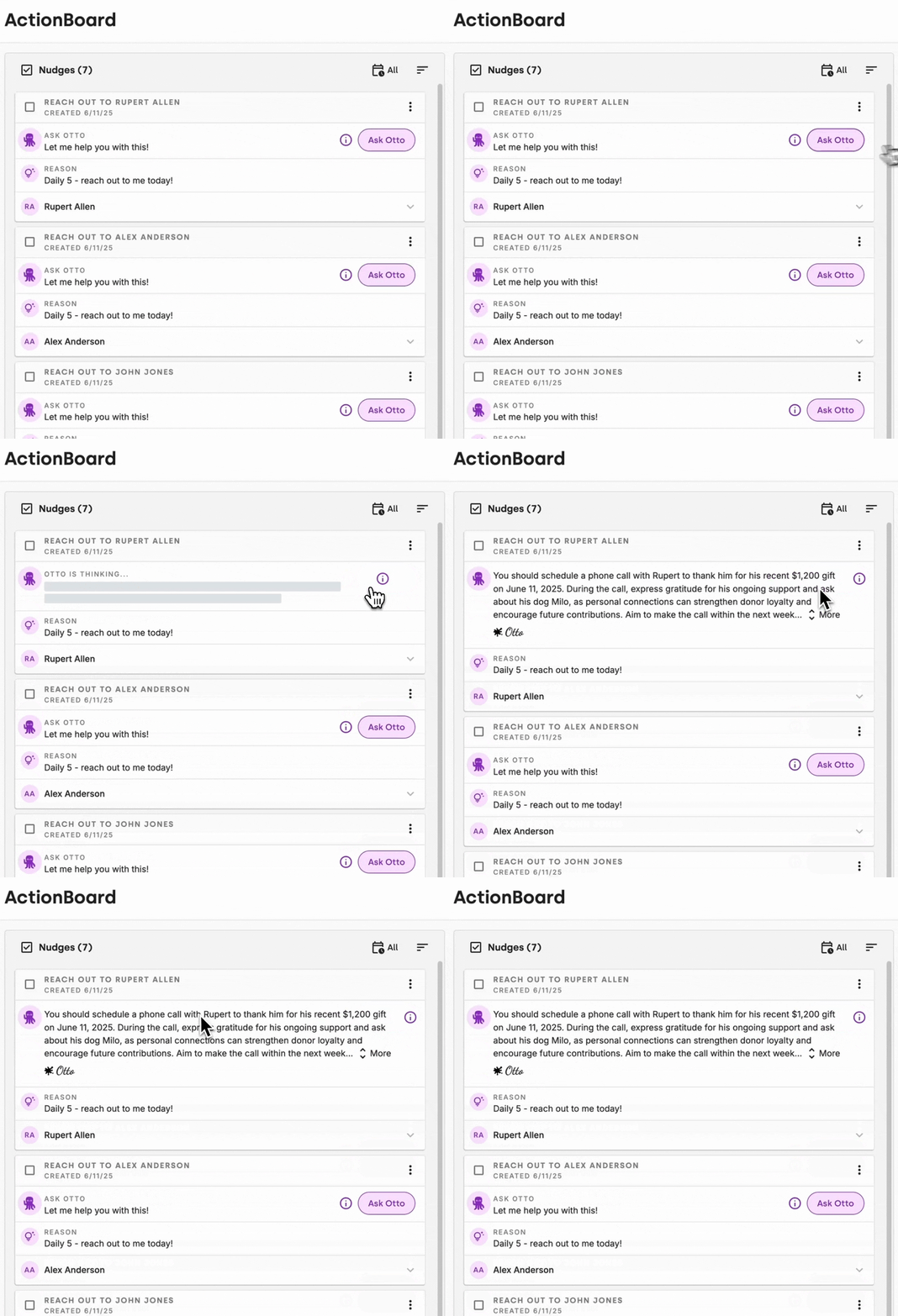
The system surfaces what needs attention. Passive databases require you to remember to check them. Active systems, like DonorDock, tell you who needs outreach now. Birthday coming up? First gift anniversary approaching? Donor who usually gives in October but hasn't yet? The system should flag these patterns so you can act on them.
Notes become institutional intelligence. When you document why a donor gives, what programs they care about, how they prefer to communicate, and what life events matter to them, you're building strategic intelligence. Future team members can step into relationships without starting over. Your CRM becomes the shared memory of the organization, holding context that makes communication personal even when staff changes.
Automation handles routine touchpoints so humans focus on high-value interactions. Nobody needs to manually remember to send a thank-you email or schedule a one-year giving anniversary check-in. Automation should be an exponent to human connection, multiplying your capacity for meaningful outreach, not replacing it.
Automate the scaffolding that supports relationships, freeing you to focus on the human moments that actually matter.
How do you capture donor information without it feeling transactional?
There's a legitimate concern here. Documenting every conversation can feel mechanical or surveillance-like if you're not thoughtful about it. Here's how to keep it human:
Write notes for your future self. Don't transcribe every word. Capture the essence: "Mentioned her daughter just started college, first in the family. Cares deeply about education access because of her own upbringing. Prefers phone calls to email. Asked about scholarship fund. Follow up with options."
Focus on what deepens connection. Document personal details that help you show up as a human, not a solicitor. Their recent trip, their career transition, their volunteer experience with you, their reason for first giving. These are the threads that weave authentic relationships.
Use donor-facing language. Instead of "Prospect capacity: $10K," write "Has expressed interest in making a more significant gift when the time is right." If a donor ever saw your notes, would they feel respected or commodified?
Make it easy to capture in the moment. The harder your system makes note-taking, the less you'll do it. Tools that let you email notes directly into your CRM or voice-to-text on mobile remove friction. If you have to log in, navigate three screens, and fill out six fields, you won't maintain the habit.
What does relationship-building look like when you have a system?
Here's an example. You're a one-person development shop at a small arts nonprofit. You have 450 donors, a board that expects growth, and approximately 15 hours a week for actual fundraising (the rest is events, grant writing, and administration).
Monday morning: Your CRM shows you the week ahead. Five donors have birthdays this week. Three major donors haven't been contacted in 60 days. Two recurring donors just hit their one-year giving anniversary. A donor who gave $500 annually for four years has lapsed. In DonorDock, your ActionBoard doesn't require you to remember any of this, it surfaces what matters.
Tuesday: A planned giving prospect calls. Before answering, you pull up their record. You can quickly summarize the contact notes from six months ago, showing they mentioned getting their estate planning done. They've given $1,000 annually for eight years. They attended your gala and bid on the auction item supporting your youth program. You answer the call prepared with context, not scrambling to remember who they are.
Wednesday: You're writing thank-you notes. Your system has automatically segmented first-time donors, so you're writing to people who just made their initial gift.
This is how modern nonprofit CRMs are designed to work. Not as databases you have to remember to check, but as active partners in relationship stewardship.
How do you build the habit of systematic documentation?
Knowing you should document donor interactions and actually doing it consistently are different things. Here's how to make it stick:
Start with a simple template in your head. After every donor conversation (phone, email, in-person) capture four things:
- What we talked about (brief summary)
- What I learned about them personally
- Next action and timing
- Any red flags or concerns
This takes three minutes. Do it immediately, not at the end of the week.
Use technology to reduce friction. The easier your system makes documentation, the more consistently you'll do it.
Build it into existing workflows. Don't treat note-taking as a separate task. Make it part of the donor interaction itself. Before you end the call, open your CRM. Before you leave the coffee meeting, write the note. Before you close your email, log the exchange.
Review and refine weekly. Set aside 15 minutes every Friday to review the week's donor interactions. Did you capture enough context? Did you schedule appropriate follow-ups? Are there patterns emerging you should act on? This weekly rhythm keeps your data clean and actionable.
Make it a team norm, not an individual responsibility. When everyone on your team, executive director, program staff, board members, understands that logging donor interactions is how you protect institutional knowledge, documentation becomes culture rather than one person's job.
The goal is making documentation so habitual that not doing it feels weird. Like brushing your teeth or putting events on your calendar...it's just what you do.
What about when you're wearing all the hats?
This is the reality for most small-team fundraisers: you're the researcher, the relationship manager, the strategist, the executor, and the analyst.
Here's the paradox: you need systems even more than large teams do, but you have less time to build them.
Start with what's already working. Don't try to implement a comprehensive donor management strategy overnight. If you're already sending thank-you emails, systematize that one touchpoint first. Template your responses, automate the follow-up reminders, track who got what. Master one donor journey before adding others.
Leverage pre-built structures. Most modern nonprofit CRMs come with donor journey templates already built in: first-time donor welcome series, recurring donor stewardship, lapsed donor reactivation, major donor cultivation. You don't have to build from scratch, you customize what's proven to work.
Focus on scalable personal touches. You can't handwrite 200 thank-you notes, but you can handwrite notes to your top 20 donors while sending personalized (not generic) emails to everyone else. You can't have coffee with every donor, but you can make five relationship-building calls every Tuesday. Personalization doesn't require one-to-one time with every supporter, it justrequires using what you know to make every touchpoint more relevant.
Automate the scaffolding, personalize the moments. Let your CRM automatically tag donors based on giving patterns, send birthday acknowledgments, create tasks when donors haven't been contacted in 90 days, and flag when someone's giving behavior changes. This frees you to focus energy on the conversations, asks, and moments of genuine connection that can't be automated.
Protect relationship time. When you're wearing all the hats, everything feels urgent. Build a weekly rhythm that protects donor-facing time: Monday planning, Tuesday calls, Wednesday writing, Thursday follow-up, Friday review. This structure prevents donor relationships from getting squeezed out by other urgent tasks.
The growing fundraising teams building the strongest donor relationships aren't doing more, they're doing less, better, with systems that make consistency possible.
Why does this matter more now than ever?
The nonprofit sector is at an inflection point. Donor retention challenges persist, with the average first-time donor attrition rate hovering around 80%. Many struggle with retention because they're using these tools as databases, not relationship systems.
The organizations that will thrive aren't the ones with the biggest budgets or the most staff. They're the ones that build systems allowing growing fundraising teams to steward relationships at scale.
Rachel said something else in our conversation that stuck with me. She talked about how having a system lets her focus on what's happening now, not trying to remember what happened before. That's the promise of good systems: they free you to be present.
When you know your CRM will remind you about the donor's gift-aversary, you don't have to mentally hold it. When you trust your system to flag donors who need attention, you don't carry that anxiety. When documentation is habitual, you can fully engage in conversations instead of worrying about forgetting details.
This is about becoming more human by offloading the cognitive burden that prevents you from showing up fully for the people who believe in your mission.
The choice you're actually making
You have two options: continue relying on individual memory and heroic effort, or build systems that make relationship fundraising sustainable.
The first path leads to burnout. Key relationships slip through the cracks. Institutional knowledge walks out the door with departing staff. Growing Fundraising Teams stay small because they can't scale what lives in someone's head.
The second path leads to confidence. You walk into every donor conversation prepared. You follow through on commitments because your system reminds you. New staff members can step into relationships without starting over. Your organization grows because donor relationships survive beyond any individual.
The fundraisers who build sustainable giving programs don't try to remember everything. They build systems that remember for them. They don't rely on personal relationships that only they can maintain. They create documented, transferable knowledge that strengthens with every interaction.
And most importantly, they recognize that caring deeply about donors and having rigorous systems aren't opposites. The systems exist to serve the relationships. The documentation enables the authenticity. The automation creates space for human connection.
You need a better system. And you don't have to build it alone.
Ready to stop relying on memory and start building donor relationships that scale? See how DonorDock helps fundraising teams track, steward, and grow donor relationships with systems designed for how busy fundraisers actually work. Because your donors deserve more than hoping you remember them.