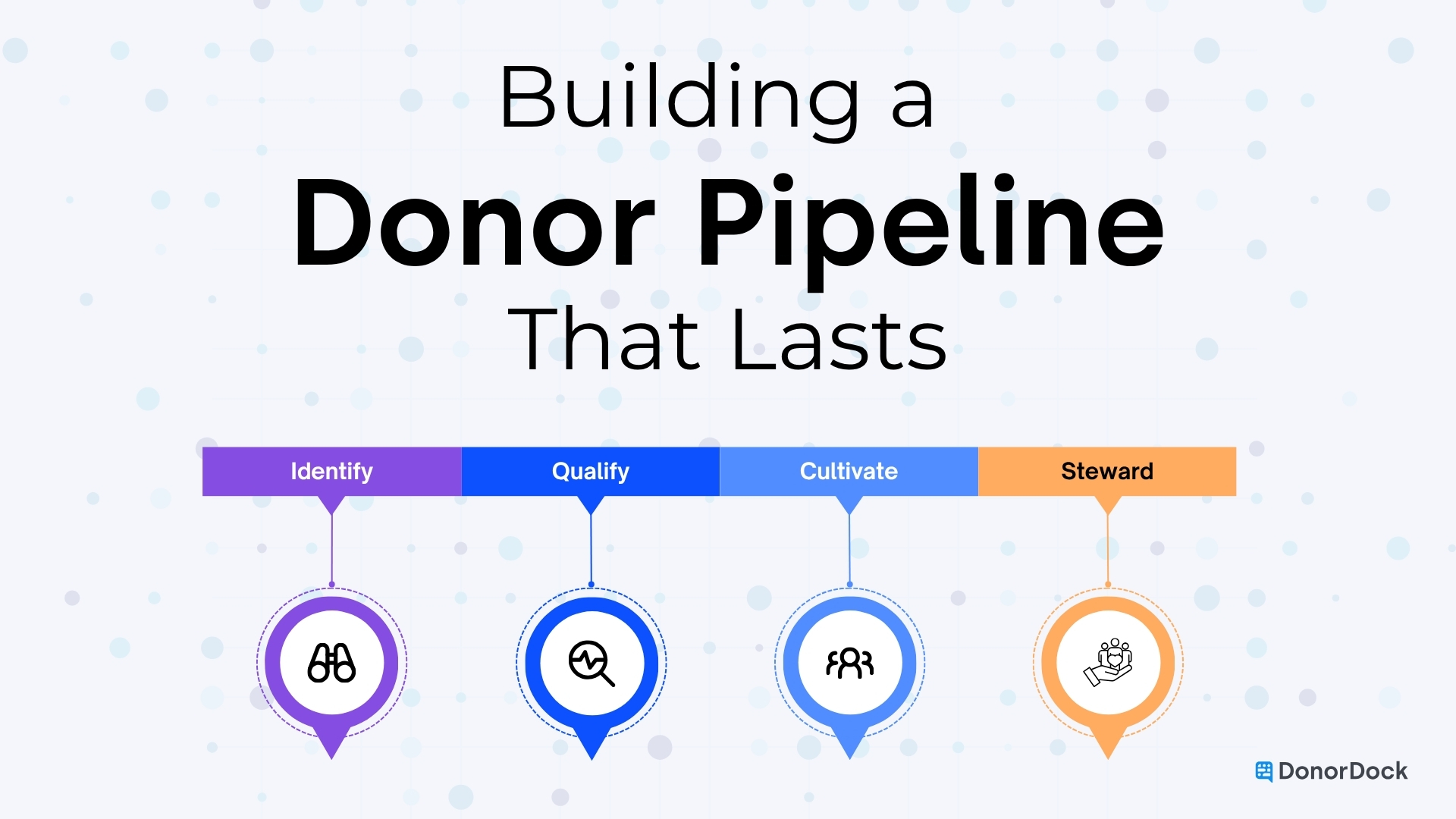
Unpredictable fundraising wears down even the most passionate teams. You work hard, you send emails, you plan events, and yet the results swing wildly from one quarter to the next. It’s not because the mission lacks appeal, it’s because too much of your effort lives in isolated moments. You sprint to meet deadlines, but there’s no system pulling new opportunities forward.
A donor pipeline changes that. It turns scattered effort into connected progress. Instead of wondering where your next gifts will come from, you start to see patterns. You begin to understand who’s entering your orbit, who’s deepening their connection, and who’s quietly slipping away. The process stops being a guessing game and becomes a rhythm you can trust.
The Power of Seeing Your Pipeline Clearly
A good pipeline gives you a clear picture of what’s really happening in your fundraising. It’s a living map of relationships in motion. It tells you who’s new and curious, who’s engaged and waiting for a next step, and who’s already an advocate. Without that visibility, it’s easy to confuse activity with progress.
Imagine opening your CRM and immediately seeing which donors haven’t been contacted in three months, who just made their second gift, and who attended last week’s event. That snapshot reveals both momentum and risk. You can spot the people who need nurturing before they drift away, and you can double down on those showing signs of growing commitment.
Building this kind of clarity takes time, but it also takes intention. Start by reviewing your donor base through the lens of engagement rather than just gift size. The goal isn’t to rank people by how much they’ve given, it’s to understand where they are in their relationship with your mission.
Bringing Order to the Chaos
For growing fundraising teams, the challenge is the sheer number of moving parts. Notes are scattered across inboxes. Donor history hides in spreadsheets. A crucial follow-up gets buried under a flood of emails. When everything lives in different places, no one has the full picture.
That’s where a good CRM transforms how a team works. Every donor record can hold the full story: the last call, the last thank-you, the last event they attended. When you log in, you’re stepping into the narrative of your supporters. Tasks, automations, and activity logs keep that narrative alive.
The benefit goes beyond organization. It builds confidence. When a teammate steps in to talk to a donor, they can see exactly what’s been said and what’s next. The fear of “dropping the ball” starts to fade, and the team’s communication becomes consistent, even as people come and go.
Keeping the Pipeline Moving
A pipeline only works when it moves. It’s not a static chart, it’s an ongoing process of relationship building.
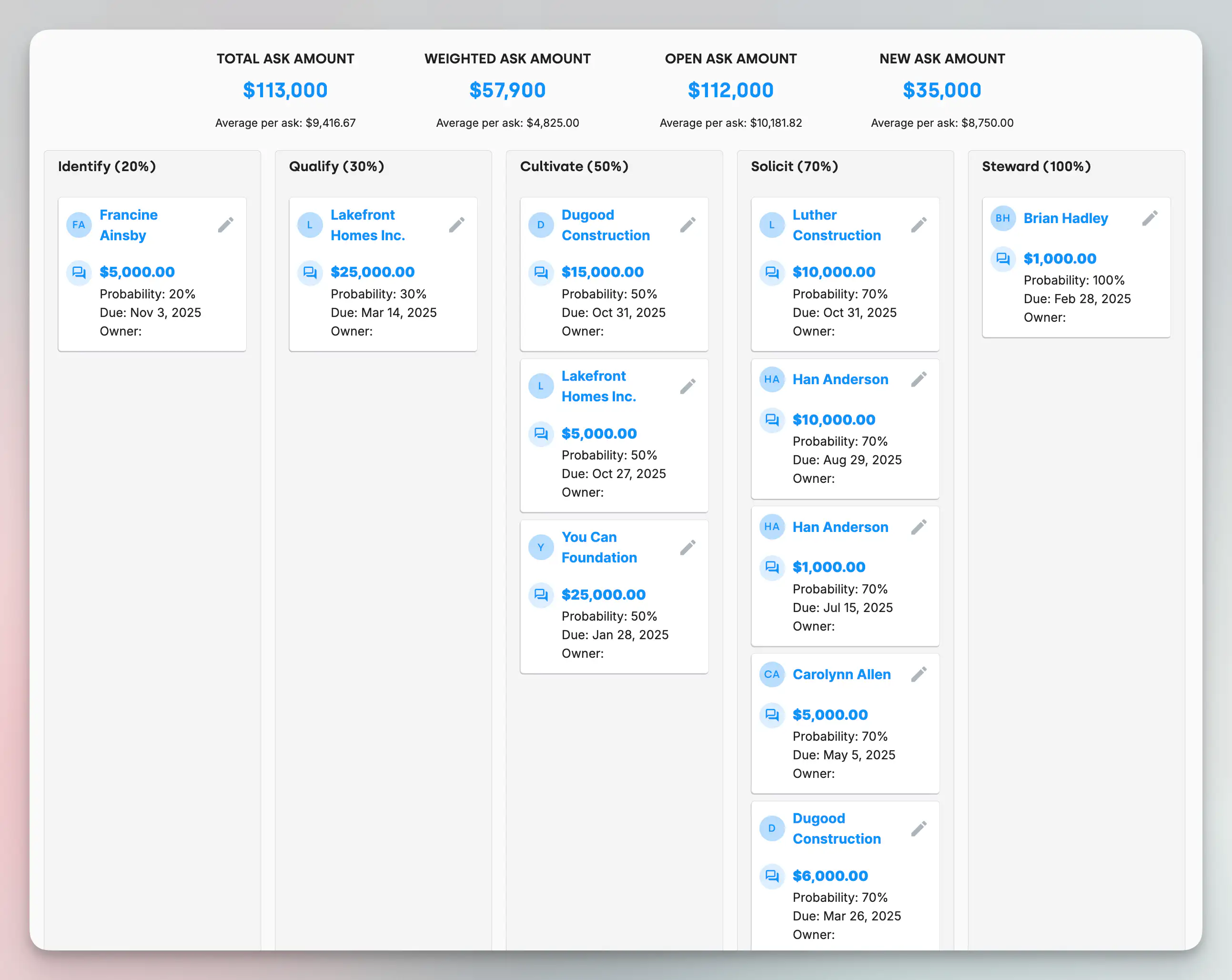
Each donor should have a visible next step, even if it’s small. Maybe it’s a thank-you note, a check-in email, or a conversation about why they first got involved. Each of those actions keeps energy flowing through the system.
Creating movement doesn’t have to mean adding more work. It often means designing better routines. Set clear entry points so that new contacts from forms, events, or campaigns automatically land in your CRM with the right tags. Use automation for the repetitive but essential things like thank-you messages, reminders to follow up, or notifications when someone’s engagement drops off.
Every week, carve out a few minutes to review your pipeline. Notice which relationships are warming up and which seem to be cooling. It’s a quick exercise that can change the trajectory of your fundraising. When you focus on consistent motion instead of sporadic effort, the results compound faster than you’d expect.
Leadership Sets the Example
A strong donor pipeline grows out of culture. Teams follow what leaders prioritize. So when executive directors and development managers consistently ask about donor relationships, review progress in meetings, and celebrate cultivation wins, they send a message that relationship-building is as valuable as closing a big gift.
That shift in culture helps teams pace themselves. Instead of chasing year-end totals in a panic, they invest in the steady work that leads to sustainable growth. They begin to see relationship-building as everyone’s job, not just the fundraiser’s. When that happens, the organization’s tone toward donors changes too, it becomes warmer, more confident, and far more human.
From Short Bursts to Steady Growth
The most successful fundraising programs don’t rely on bursts of energy. They thrive on predictable rhythms. Every outreach, every note, every logged call builds upon the last. It’s the accumulation of these small, consistent actions that creates long-term stability.
With the right systems and mindset, even growing fundraising teams can achieve this kind of consistency. A single well-organized CRM becomes the shared memory of the organization. It holds the context that makes communication personal, even when staff changes. Over time, that shared knowledge becomes your greatest fundraising asset.
Growth stops feeling like something you chase and it starts to feel like something you’re building.
Start Strengthening Your Pipeline
If you’re ready to create that kind of structure, start by exploring tools designed to support it.
- Donor Management CRM: keep every interaction connected and visible.
- Automation Tools: maintain momentum between touchpoints, even when you’re short on time.
- Engagement Reports: see at a glance where relationships are growing and where they’re fading.
A clear, organized pipeline makes fundraising more meaningful. It helps you focus less on chasing donors and more on serving them, one thoughtful interaction at a time.