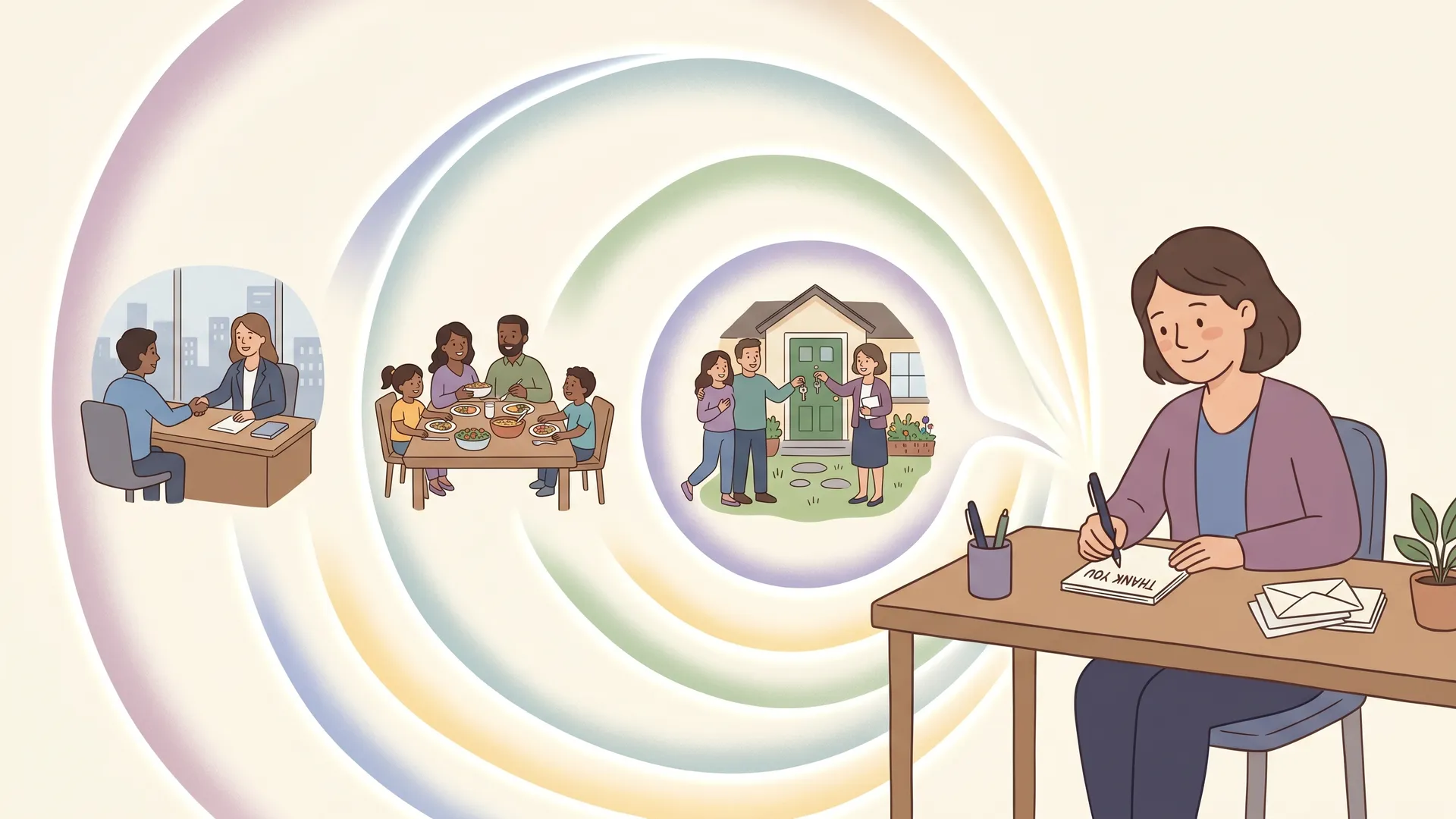
When your outcomes resist easy measurement, stop trying to prove impact with numbers alone. Instead, build donor narratives that connect tangible contributions to human transformation. The most effective fundraisers in this space use what we call "contribution chains," linking a donor's specific gift to a sequence of concrete changes in someone's life.
Why Traditional Impact Metrics Fail Transformational Organizations
If you run a food bank, your impact story is relatively straightforward: 50,000 meals served, 2,000 families fed, 12 counties reached. The numbers do the heavy lifting.
But what if your organization helps people rebuild their lives after incarceration? What if you're guiding someone through addiction recovery, mentoring at-risk youth, or providing transitional housing? The outcomes that matter most, like restored dignity, rebuilt family relationships, and renewed sense of purpose, don't fit neatly into a spreadsheet.
This is what researchers at the Bridgespan Group call the "measurement paradox": the organizations doing the deepest, most transformational work often have the hardest time proving it to funders. And that paradox creates a real fundraising problem.
When you can't clearly articulate what a donor's gift accomplished, those retention numbers get even worse.
The Donor Psychology Behind "Show Me the Numbers"
Here's what's actually happening when a donor asks for metrics: they're looking for confidence that their money mattered.
Research from Yale's School of Management on donor behavior shows that emotional connection and perceived impact drive giving decisions far more than statistical evidence. Donors want to feel something. Numbers are just one way to deliver that feeling.
The problem is that most nonprofits default to one of two extremes. They either throw out vague mission statements ("we're changing lives!") or they scramble to manufacture metrics that don't actually reflect their work ("we served 347 clients this quarter" without explaining what "served" means).
Neither approach builds the kind of trust that turns a one-time gift into a lasting relationship. And that trust gap is where transformational organizations lose donors they should be keeping.
The Contribution Chain: A Framework for Intangible Impact
The most effective approach we've seen is what we call the "contribution chain." It's a narrative technique that connects a donor's specific, tangible contribution to a sequence of concrete outcomes, each one building on the last until you reach the transformational result.
Here's how it works in practice. A flooring company donates materials to a sober living house. That's the tangible gift. But the story doesn't stop there:
- New flooring means a room is ready for move-in
- A person recently released from incarceration now has a safe, stable place to live
- With stable housing, they can shower, sleep in a bed, and start looking for work
- With a job, they begin rebuilding relationships with their kids
- Their story of recovery inspires others in the program to believe change is possible
That's a contribution chain. The donor didn't just give flooring. They gave someone a foundation for a completely different life. And every link in that chain is concrete, specific, and verifiable.
Why This Works Better Than Metrics Alone
Contribution chains work because they satisfy both the emotional and rational sides of donor decision-making. The donor sees the logical progression (each step follows naturally from the last) while feeling the human weight of the outcome.
Compare that to: "We provided housing services to 23 individuals this quarter." Both statements are true. Only one makes a donor want to give again.
Three Principles for Communicating Intangible Impact
1. Anchor Every Story in Something Physical
Transformation is abstract. Paint, flooring, a bed, a meal, a bus pass: these are concrete. Start your story with the tangible thing and let the narrative carry the reader from physical object to human change.
This isn't about oversimplifying your work. It's about giving donors a mental handle they can grip. When someone donates to "addiction recovery services," they're writing a check to a concept. When they donate flooring that becomes a bedroom that becomes someone's fresh start, they're part of a story.
When someone donates to "addiction recovery services," they're writing a check to a concept. When they donate flooring that becomes a bedroom that becomes someone's fresh start, they're part of a story.
2. Let the Ripple Effect Do Your Measuring
One of the most powerful things about transformational outcomes is that they multiply. A person who gets stable housing doesn't just benefit themselves. Their children grow up in a more stable environment. Their employer gets a reliable worker. Their community gets a neighbor who contributes instead of consumes services.
You don't need to quantify every ripple. But naming them, saying them out loud in your donor communications, shows donors that their impact extends far beyond the initial gift. It reframes a single donation as an investment in cascading change.
3. Use Time as Your Metric
When you can't count outcomes easily, consider measuring the journey instead. "Maria has been in stable housing for six months" is a powerful data point. "James has held his job for a year" tells a story of sustained change that no single metric could capture.
Time-based updates also give you a natural rhythm for donor communication. Instead of scrambling for new numbers each quarter, you're updating donors on the ongoing story of someone's transformation. That's the kind of follow-up that builds long-term donor retention.
Putting It Into Practice: Your Communication System
Knowing the framework is one thing. Building it into your regular donor communication is another. Here's where most organizations with intangible outcomes fall short: they tell a great story once and then go silent.
FEP reports that donors who give more than once have dramatically higher retention, jumping from 19.2% for one-time donors to 62.5% for those who've given three to six times. The second gift is the critical threshold, and consistent, story-driven communication is what gets you there.
Use your donor management platform to track which stories you've shared with which donors. Log the contribution chain for each major gift so your follow-up communications can reference the specific impact of their generosity. When a donor who gave flooring six months ago gets an update that the person in "their" room just landed a job, that's not a mass email. That's a relationship.
DonorDock's donor timeline makes this kind of personalized follow-up practical even for lean teams. Every interaction, gift, and note lives in one place, so when it's time to send that six-month update, you're not digging through spreadsheets to remember who gave what.
The Competitive Advantage of Hard-to-Measure Work
Here's something that might surprise you: having intangible outcomes can actually be a fundraising advantage if you communicate them well.
Organizations with simple, countable metrics often compete on efficiency. "We serve meals for $2.13 each" invites comparison shopping. Donors start evaluating you like a product.
But when your outcomes are transformational, you're not competing on cost-per-unit. You're offering donors something money can't easily buy: the chance to be part of someone's redemption story, their recovery, their second chance.
And relationships, as any experienced fundraiser knows, are where sustainable funding lives. Harvard's Advanced Leadership Initiative research found that grassroots organizations that earn trust through proximity and authentic connection build more resilient funding bases than those relying on transactional appeals.
Stop Apologizing for What You Can't Count
If you've been feeling like your organization is at a disadvantage because your outcomes don't translate into clean statistics, flip that narrative. Your work resists easy measurement because it's complex, human, and deeply meaningful.
The nonprofits that fundraise effectively around intangible impact are the ones who learn to tell the story so clearly that donors feel the impact without needing a chart.
Build your contribution chains. Anchor your stories in tangible objects. Let the ripple effects speak. And use time as your ally, not your enemy.
Your donors need to feel confident that their gift mattered. Give them that, and your fundraising will follow.