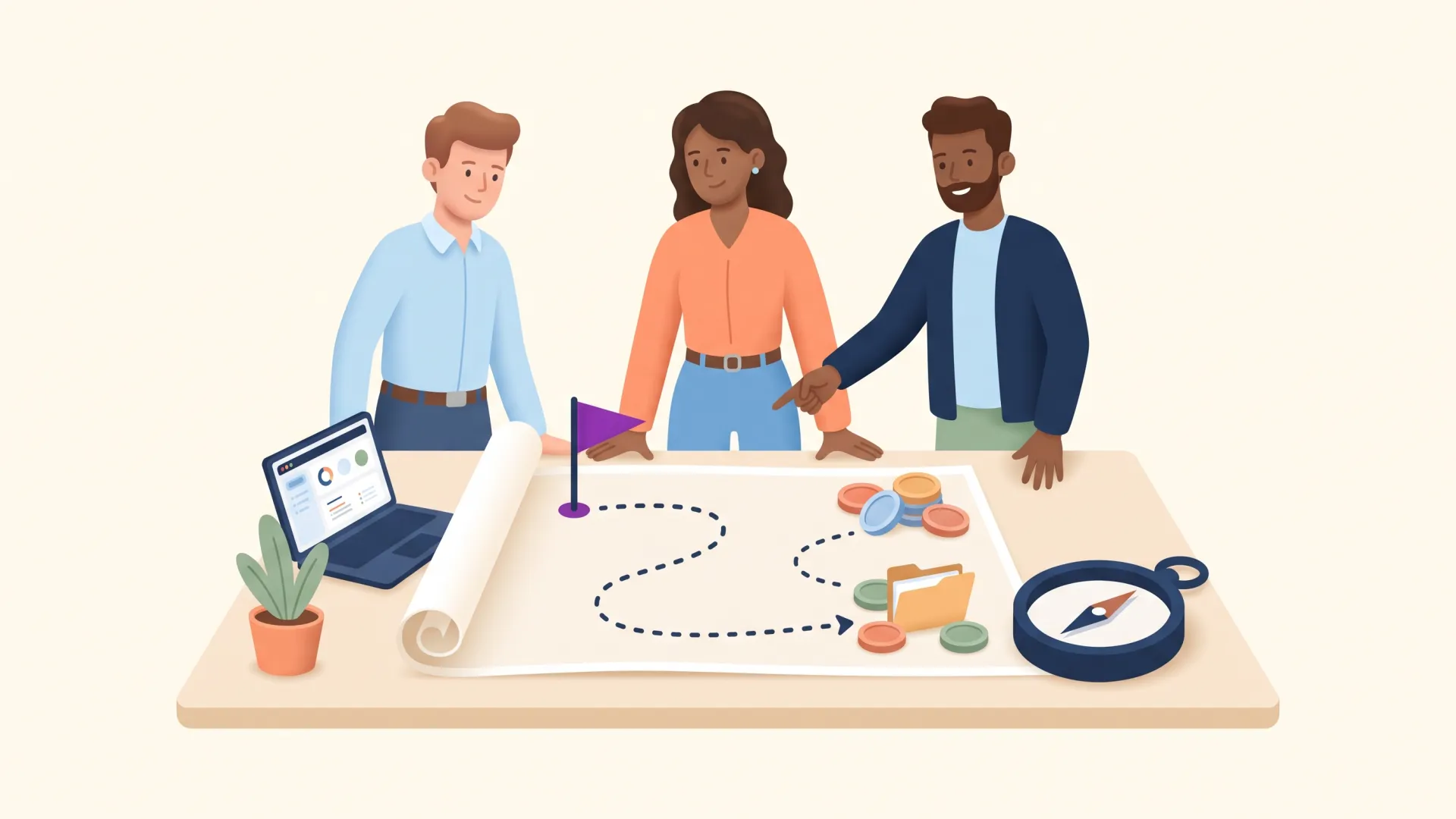
If you’re running fundraising with a lean team (or you are the team), “personalized stewardship” can sound like a nice theory other organizations do.
You’re juggling events, newsletters, grants, social, board requests and “just one quick thing” from every department. And on top of that, you’re somehow supposed to remember that Sam likes handwritten notes, Priya prefers email, and the Johnsons only give if you keep them out of the spotlight.
Here’s the good news: you don’t need a big staff to make donors feel seen. You just need a simple system and some smart use of your CRM.
In this article, I’ll walk through how you can personalize stewardship in a very real, very doable way, even as a small or growing fundraising team.
What does personalized donor stewardship actually mean for growing fundraising teams?
Let’s start by shrinking the goal to something you can actually hit.
Personalized stewardship doesn’t mean:
- Writing a totally unique letter for every single donor
- Remembering every preference in your head
- Being “on” 24/7 for anyone who’s ever given $10
For growing fundraising teams, personalized stewardship means:
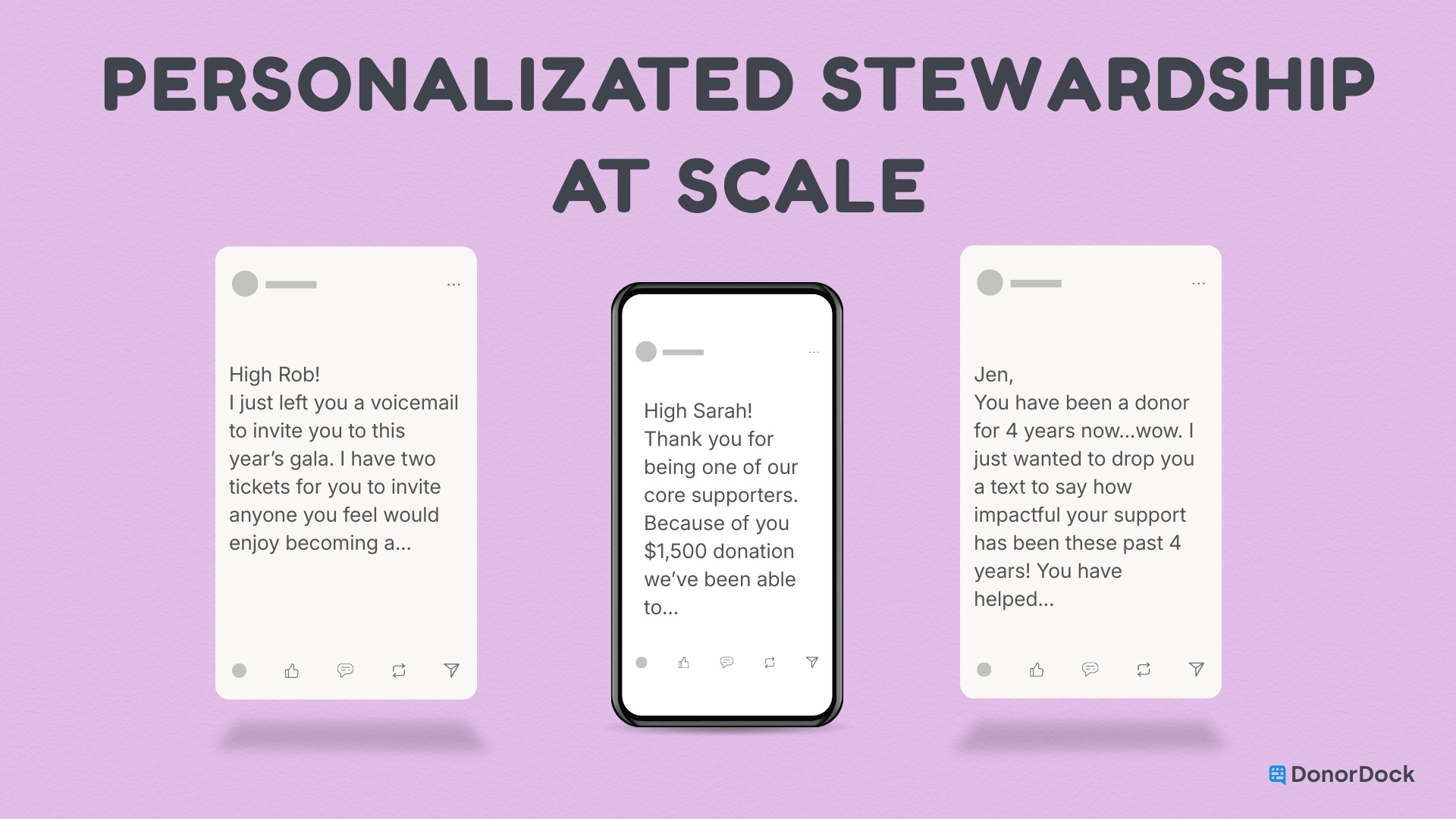
Using what you know about a donor to choose the right message, channel, and timing, so they feel like a person, not a receipt number.
And you can do that at scale when you:
- Capture a few key preferences
- Organize them in your CRM
- Build light-but-smart journeys that run in the background
- Layer personal touches on top for your most important relationships
Don’t underestimate the impact. Research shows personalized, segmented email campaigns can generate up to 760% more revenue than generic “blast to all” messages.
On the flip side, donor retention across the sector is stuck in the low 40% range overall, with new donor retention hovering under 20%. That’s a lot of people giving once and disappearing. Personalized stewardship is one of the clearest levers you have to change that.
Which donor preferences are worth tracking so you can personalize stewardship?
You can’t track everything. Nor should you. If you try to collect 40 data points on every donor, you’ll never keep it updated, and your mental load skyrockets.
So let’s narrow it down. For small & growing fundraisers, we recommend starting with five simple categories of preferences.
1. Communication channel
How do they actually want to hear from you?
- Print mail
- Text
- Phone call
- Social media messages
A 2025 survey of 641 online donors found that 57% prefer to be thanked by email, with smaller percentages choosing letters, postcards, texts, and phone calls.
That doesn’t mean “never mail letters,” but it does mean email can carry a lot of the load, while you reserve more time-intensive channels for key segments.
2. Recognition style
Some donors love public shoutouts. Others will disappear if their name ever shows up on a step-and-repeat banner again.
Track simple options like:
- Loves public recognition
- OK with being listed, nothing flashy
- Prefers anonymous / low-profile
Drop this into a custom field or tag in your CRM. That way, before you publish an annual report or post a donor spotlight, you can filter out the “anonymous” folks automatically.
3. Giving interests
What do they care about inside your mission?
- Programs or campaigns they’ve supported
- Topics they click on most in your emails
- Events they actually attend
In DonorDock’s guide to donor segments, we talk about turning key donor segments into dynamic, personalized journeys instead of one-size-fits-all lists. Interests are one of the easiest ways to build those segments.
4. Engagement level
You don’t have to engage every donor the same way. In fact, you can’t.
Create simple bands like:
- Core insiders (board, ambassadors, top 10% of donors, recurring givers)
- Engaged supporters (give annually, attend events, open emails)
- Occasional givers (one-time or infrequent, low interaction)
Your “core insiders” should get your most personal touches: calls, texts, coffee invites. Your “occasional givers” can stay mostly in automated journeys with a few human check-ins.
5. Donor “love language”
This one’s more subjective, but powerful. Pay attention to:
- Do they light up when you share impact stories and photos?
- Do they mostly respond to invitations and experiences?
- Do they talk about liking to “stay in the background” and just know things are handled?
- Do they prefer less frequent, high-quality updates?
Anytime you hear a clue, drop a note into your CRM record. Over time, you’ll start to see patterns.
Pro tip: In DonorDock, you can use notes, tags, and custom fields to track these preferences and then plug them straight into segments and journeys. Otto can give you insights across all these data points without you having to remember them or dig into them yourself..
How can you personalize stewardship at scale without burning out?
This is where we shift from “nice idea” to “this actually fits into my week.”
Think of your stewardship system as two layers:
- Automated and semi-automated journeys that cover your bases
- Human touches that you schedule for your highest-value relationships
Step 1: Build a few core stewardship journeys
You don’t need 20 automations. Start with 3–4 journeys that touch the majority of your donors.
For example, DonorDock comes with pre-built journeys for you to use like:
- New donor welcome series
- Recurring donor gratitude cadence
- Major Donor personal touchpoints
- Lapsed donor re-engagement
Each journey can be:
- Triggered automatically (first gift, event registration, recurring signup)
- Segmented by preferences (channel and interests)
- Peppered with light personalization (first name, last gift, program supported, gift amount)
The goal is for these journeys to carry the relationship between moments when you can be more hands-on. They help you focus on what matters most instead of reinventing every thank-you from scratch.
Step 2: Use your CRM to surface who needs a personal touch
Personalization doesn’t work if you only do it when you remember. Your CRM has to nudge you.
In DonorDock, tools like the Action Board and Smart Nudges help growing fundraising teams see:
- Which donors are about to lapse
- Who just made a surprisingly generous first gift
- Who has a birthday or giving anniversary coming up
- Which tasks are the highest priority today
As one user put it, the Action Board “helps us identify what challenges we face with donor retention” and where to start.
Whether you use DonorDock or another system, look for features that:
- Turn data into daily or weekly tasks
- Flag donors based on behavior, not just alphabetically
- Let you log calls and notes quickly so they inform future touches
This is how you move from overwhelm to more focus.
Step 3: Create a “minimum viable personalization” routine
Here’s a simple weekly rhythm many growing fundraising teams can handle:
- 15 minutes on Monday: Check your stewardship dashboard / Action Board and star 5-10 high-priority donors for personal outreach.
- 20 minutes, 3x per week:
- Make 3–5 short thank-you calls.
- Send 3 personalized emails or LinkedIn messages.
- Write 2 quick handwritten notes (save them for core insiders).
- 15 minutes on Friday: Log any new preferences you heard (“loves emails with photos,” “wants less mail,” “wants to bring friends to events”).
That’s roughly 1.5 hours a week of focused, high-impact stewardship layered on top of your automated journeys.
If that feels impossible, don’t abandon the idea. Shrink it. Start with two calls a week. Build the habit first, then add volume.
How can AI and automation help you personalize without losing the human touch?
AI and automation shouldn't replace your relationships. They’re should ease your mental load so you aren’t doing everything manually.
Used well, they can help you:
- Draft first-pass thank-you notes and emails you then personalize
- Suggest subject lines or snippets based on donor interests
- Spot patterns in who’s responding to what
- Keep data clean so you can actually trust your segments
A few guidelines so you don’t cross the “creepy” line:
- Never fake a phone call. If a message says “I just tried calling you,” it should be true.
- Don’t overuse merge fields. “Hi {First Name}, I know you, {First Name}, care about {Program Name}…” feels robotic fast.
- Stay honest about data. If you’re using a predictive model or AI-generated content, that’s fine. Just don’t claim a human painstakingly wrote 10,000 individual notes overnight.
Automation is how you make that real at scale without a 10-person advancement office.
Bringing it together: a simple personalization blueprint for your team
If you take nothing else from this, take this 5-part blueprint:
- Decide what “personalized” means for your org. Focus on channel, recognition, interests, engagement level, and donor “love language.”
- Pick 3–4 core journeys. New donors, recurring donors, lapsed donors, and major donors are great starting points.
- Use your CRM to do the heavy lifting. Lean on features like Stewardship Journeys, segments, Action Boards, and Smart Nudges instead of spreadsheets and sticky notes.
- Schedule tiny, consistent human touches. Even a few calls, notes, or personal emails each week will set you apart in a sector where donors often feel unseen.
- Continuously capture preferences. Any time a donor tells you how they like to be thanked or what they care about, drop it into the record. Future you will thank present you.
And that’s exactly what tools like DonorDock are built for: small & growing nonprofits who want deeper donor relationships.
Ready to personalize stewardship without drowning in work?
When you’re ready to see how DonorDock can help you cut through the noise and build personalized journeys that actually fit your capacity, schedule a quick demo to see it in action.