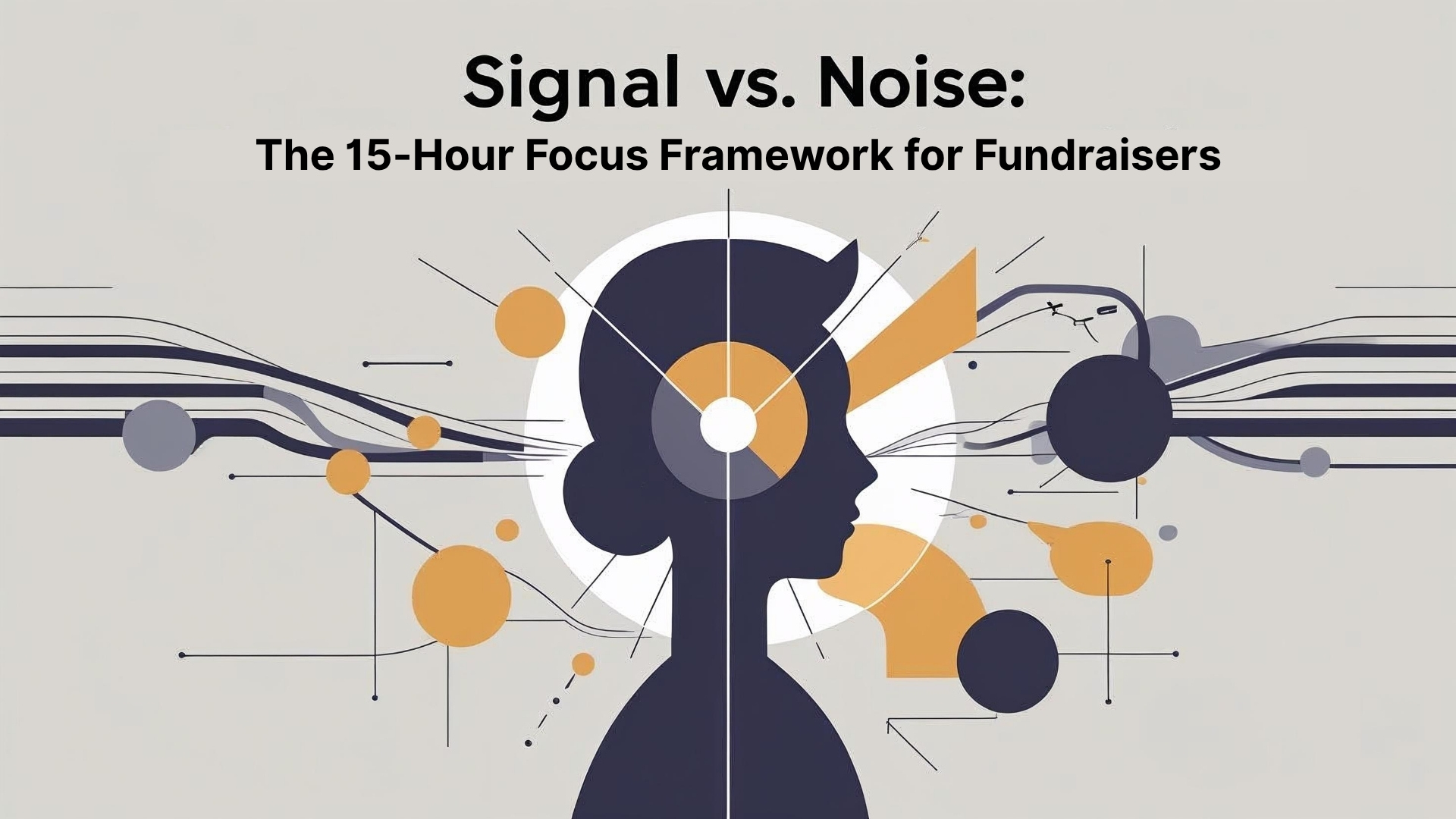
You juggle grant deadlines, board questions, surprise fires to put out, and a never-ending inbox. At the end of the week you wonder, “Did I actually talk to any donors?”. The “three-to-five mission-critical tasks” mantra offers a sanity-saving reset: carve out just 15 focused hours a week for high-impact donor work and let the noise go quiet.
Below is a practical playbook to help small and growing fundraising teams protect those hours, deepen relationships, and see retention climb.
Why Your Calendar Lies About “40 Hours”
“If everything is a priority, nothing is.” – Courtney Harrness on The Focused Fundraiser
Most nonprofit calendars look full, but research shows they’re packed with tasks that don’t move the mission. A 2024 Nonprofit PRO survey found one-third of small organizations spend more than 16 hours every week on case-management admin before any fundraising begins. (nonprofitpro.com)
It gets tighter. Veritus Group’s time-and-motion analysis notes that once holidays, meetings, and urgent “drop-everything” requests disappear, frontline fundraisers have only 18 working days a month, about 144 hours, to build donor relationships. (veritusgroup.com)
Common “noise” culprits:
- Multi-department meetings without a clear ask
- Untargeted mass-email reviews
- Event planning that never touches major donors
- Hours spent exporting, cleaning, andthen re-exporting reports
If any of these eat into your week, you need a focus firewall.
The 15 Hour Focus Framework
1. Set a 15-Hour Weekly Budget
Block three hours each weekday (or two full days) for donor-facing work only: calls, proposals, thank-you notes, research, and stewardship planning. Guard these hours like they’re your children.
2. Pick Three to Five Mission-Critical Tasks a Day
Courtney recommends choosing a handful of actions that directly advance a donor relationship. Write them the night before so you wake up to clarity, not chaos.
Example Daily Trio
- Personalize a program impact story for last quarter’s top supporter
- Call three monthly givers to share quick updates
- Draft a $5k proposal for an upcoming warm prospect
3. Triage Everything Else
Create a parking-lot list for tasks that feel urgent but don’t fuel relationships. Review it after your 18 hours are complete. Many items will solve themselves or shrink in importance.
4. Let Your CRM Do the Nagging
DonorDock’s Smart Nudges and the new Otto assistant remind you when a donor’s birthday, pledge, or annual giving window is near so you’re not scrolling spreadsheets at 10 p.m. Learn more.
For a refresh on donor-lifecycle touchpoints, skim 5 Tips to Improve Your Donor’s Lifecycle Journey or review the personas section in Fundraising 101.
Bonus: Watch our discussion with Fundraiser Courtney Harrness
From Hours to Outcomes
Focused fundraising is more than feeling organized, it delivers measurable gains.
- Retention beats acquisition. Overall donor retention hovers at 40–45 percent, but digital-first, relationship-heavy nonprofits push that to 53 percent. (nextafter.com)
- The gap is widening. North American retention dipped to 46.6 percent in 2023, making every saved donor doubly valuable in 2025. (dataro.io)
- Staff morale rises. Fewer spinning plates reduce burnout, a leading cause of 16-month average fundraiser turnover.
Quick Wins You’ll Notice
- Shorter reply times from key supporters
- More recurring gifts as donors feel seen
- Cleaner data because you record calls and notes while they’re fresh
- A calmer brain that can dream bigger campaigns
Action Steps for This Week
- Open your calendar and protect three donor-first hours each day.
- List tomorrow’s 3-5 mission-critical tasks before signing off tonight.
- Turn on Smart Nudges (or your CRM’s equivalent) so follow-ups surface automatically.
- Share the 15-Hour rule with your team and invite them to try it for one week. Compare results at Friday stand-up.
Focused fundraising is about giving yourself the time and mental space to serve your donors well. Ease your mental load, deepen relationships, and let your impact speak louder than the noise.
Ready to see how DonorDock was built for small & growing fundraisers like you? Schedule a Demo and start building meaningful donor relationships today.