If the word “marketing” makes you feel a little weird, you’re not alone.
A lot of fundraisers hear “marketing” and picture slick ads, manipulative messaging, or someone telling you to “go viral” like it’s a line item on your to-do list. Meanwhile, you’re trying to keep donors engaged, run a campaign, and find the missing banner stand that disappears before every event.
On The Focused Fundraiser, Daniel Francavilla nailed what’s happening behind the scenes: marketing sometimes has a bad reputation in nonprofit circles, even though it’s deeply connected to fundraising. And then he dropped the simple truth that should settle your nervous system:
“When it comes to brand, most important thing is clarity.”
That’s the heart of ethical nonprofit marketing. Clarity builds trust. Trust fuels giving.
And right now, your donors need more reasons to trust and stay connected.
So if marketing has felt like a distraction from “real fundraising,” I want to flip that for you:
Marketing is part of stewardship. It’s how you help donors understand what you do, believe it matters, and feel confident saying yes.
Why does “marketing” feel icky to fundraisers?
Usually, it’s because marketing gets confused with hype.
Fundraisers are relationship people. You’re in the business of trust, not tricks. So when someone suggests “more marketing,” it can feel like they’re asking you to be louder instead of being truer.
But good nonprofit marketing is not about being loud. It’s about being understood.
Here’s what ethical marketing actually does:
- It reduces confusion for busy donors
- It connects your mission to a real person’s values
- It sets expectations for how giving helps
- It reinforces credibility through consistency and proof
Or said another way: marketing is how you stop making donors do extra homework.
And donors do not want homework. Fidelity Charitable found that two-thirds of donors say understanding their impact would influence them to give more, and many donors have questions or concerns about impact and credibility.
So if you’ve been avoiding marketing because it feels “salesy,” you might actually be avoiding the very thing that makes giving feel safe.
How does your brand build donor trust?
Brand is not your logo, rather it is what is behind your logo. Brand is the experience people have of you.
It’s what they believe about your organization after:
- they read your email
- they glance at your website
- they see your event photos
- they get a receipt
- they hear a board member describe your work at a backyard cookout
And trust is fragile. Independent Sector reports 57% of Americans have high trust in nonprofits, which is strong relative to other sectors, but it’s not automatic and it’s not universal.
This is where clarity becomes practical. A clear brand builds trust in three ways:
1) Clarity makes your mission feel real
If a donor can’t quickly explain what you do to a friend, your message is too complicated.
Clarity sounds like:
- “We help [who] by [what] so that [result].”
- “Your gift of $50 does [specific thing].”
- “Here’s what changed because of you.”
2) Consistency makes you feel credible
When your website sounds polished but your emails feel cold, donors get whiplash. They may not name it, but they feel it.
Consistency means your:
- tone stays human across channels
- promise stays the same across campaigns
- donor experience feels cohesive from first click to thank you
3) Proof makes the promise believable
Most nonprofits lead with purpose (good), but forget proof (also important).
Proof can be simple:
- one meaningful stat
- one short story
- one quote from a client, participant, or partner
- one photo with an honest caption
If you want a simple way to bake proof into your communication without creating a giant report, read Show Donors the Impact (Without a 20-Page Report).
What should growing nonprofits focus on first, instead of “doing more marketing”?
This is where growing fundraising teams win, because you don’t have enough time to pretend.
You can’t do everything, so you have to do what matters most.
Here are the three marketing priorities I’d put at the top of your list:
Priority #1: One clear message you reuse everywhere
Write a core sentence and refuse to let it drift.
We help [who] by [what you do] so that [result].
Then place it in:
- your homepage headline
- your donation page intro
- your email signature
- your social bio
- your next appeal’s opening paragraph
This is not repetitive. This is how people remember you.
Priority #2: One channel you can sustain consistently
Consistency beats complexity.
If you only have time for one channel, pick the one you can show up in every week without resenting your life. For most growing fundraising teams, that’s email, because you own the list and you can personalize communication without chasing algorithms.
A simple rhythm looks like:
- 2 value updates per month (impact, story, behind-the-scenes)
- 1 invitation per month (give, attend, volunteer, advocate)
- 1 gratitude touchpoint per month (thank you, donor spotlight, quick win)
Priority #3: Messaging that matches the donor’s stage
Not everyone is in the same place. Some donors are brand new. Some are repeat givers. Some only show up for events. If you send them all the same message, you create confusion.
This is where segmentation helps without adding chaos. And you most likely don’t need 20 segments. You need 3 or 4 that change how you talk.
A simple starting point:
- new donors (need welcome + proof + next step)
- repeat donors (need outcomes + appreciation + deeper connection)
- event attendees (need follow-up + invitation to become donors)
- recurring donors (need belonging + insider updates)
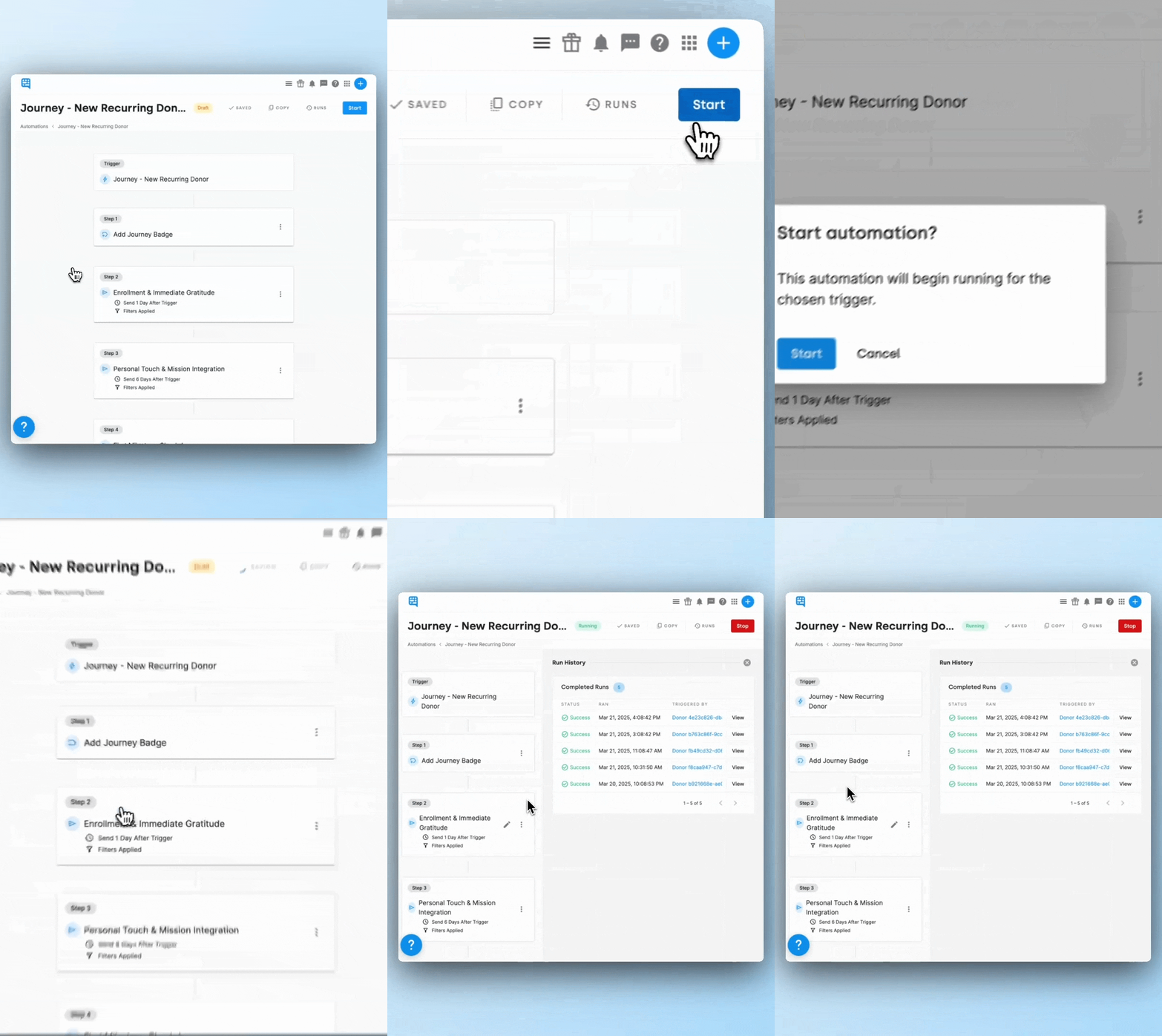
If you want an easy way to do this without manually segmenting and sending emails every week/month, DonorDock has journeys built in so you can save time and keep donors engaged. It's pretty amazing. Check it out.
What does ethical nonprofit marketing actually look like in a campaign?
Let’s make this super concrete.
Ethical marketing does not say, “Give because we’re desperate.”
It says, “Give because you can clearly see the need, the plan, and the impact.”
Ethical marketing does not exaggerate.
It tells the truth in a way that’s easy to understand.
Ethical marketing does not pressure people into a one-time gift and disappear.
It treats giving like part of a relationship.
Here’s a campaign checklist you can run in an hour:
- Clarity: Can someone understand your ask in 10 seconds?
- Specificity: Do you explain what funds will do in real terms?
- Proof: Do you show evidence you can deliver outcomes?
- Tone: Does it sound like a human wrote it?
- Follow-through: Do you have a plan to report back after the gift?
If you’re about to “turn up the volume” on a campaign, but the message still feels fuzzy, pause.
How do you start marketing when you’re already maxed out?
This is the part where I’m going to be annoyingly honest:
If marketing feels impossible, it’s usually because it lives in your brain, not in your systems.
Growing Fundraising Teams don’t fail at marketing because they don’t care. They fail because they’re reinventing every message from scratch.
So the goal is to reduce decision fatigue.
Start here:
1) Build 3 templates you can reuse
Pick three messages you send all the time and template them:
- a donor thank you
- a monthly impact update
- a campaign appeal
Then refine them, instead of rewriting new ones every time. That’s how you get better without creating more work.
2) Create a “proof bank”
Open a doc. Add:
- 10 stories (short, imperfect, real)
- 10 stats (small and meaningful)
- 10 quotes (participants, donors, partners)
- 10 photos with captions
Now your future self doesn’t have to scramble.
3) Tie marketing to retention, not just acquisition
Your marketing shouldn’t only try to find new donors. It should help keep the ones you already have.
Because the sector reality is hard: retention is still hovering around the low-to-mid 40% range, depending on the benchmark and segment.
If you want a practical retention playbook, DonorDock’s 6 Simple Strategies for Retaining Donors is a solid place to start.
Conclusion: Marketing is how you make trust easier
Marketing isn’t a dirty word. It’s a communication tool.
And for small fundraising teams, it’s one of the most practical tools you have, because it makes giving feel simple and safe.
When your message is clear, donors don’t have to work hard to understand you.
When your brand is consistent, donors trust you faster.
When you show proof, donors stay connected longer.
If you want to simplify the systems side so you can actually show up consistently, DonorDock helps small and growing fundraising teams manage donor data, communication, and giving in one place.
Ready to see what “more focus, less frenzy” looks like in a real CRM? Schedule a demo.